Thunderbird Country Club
When being first isn’t enough
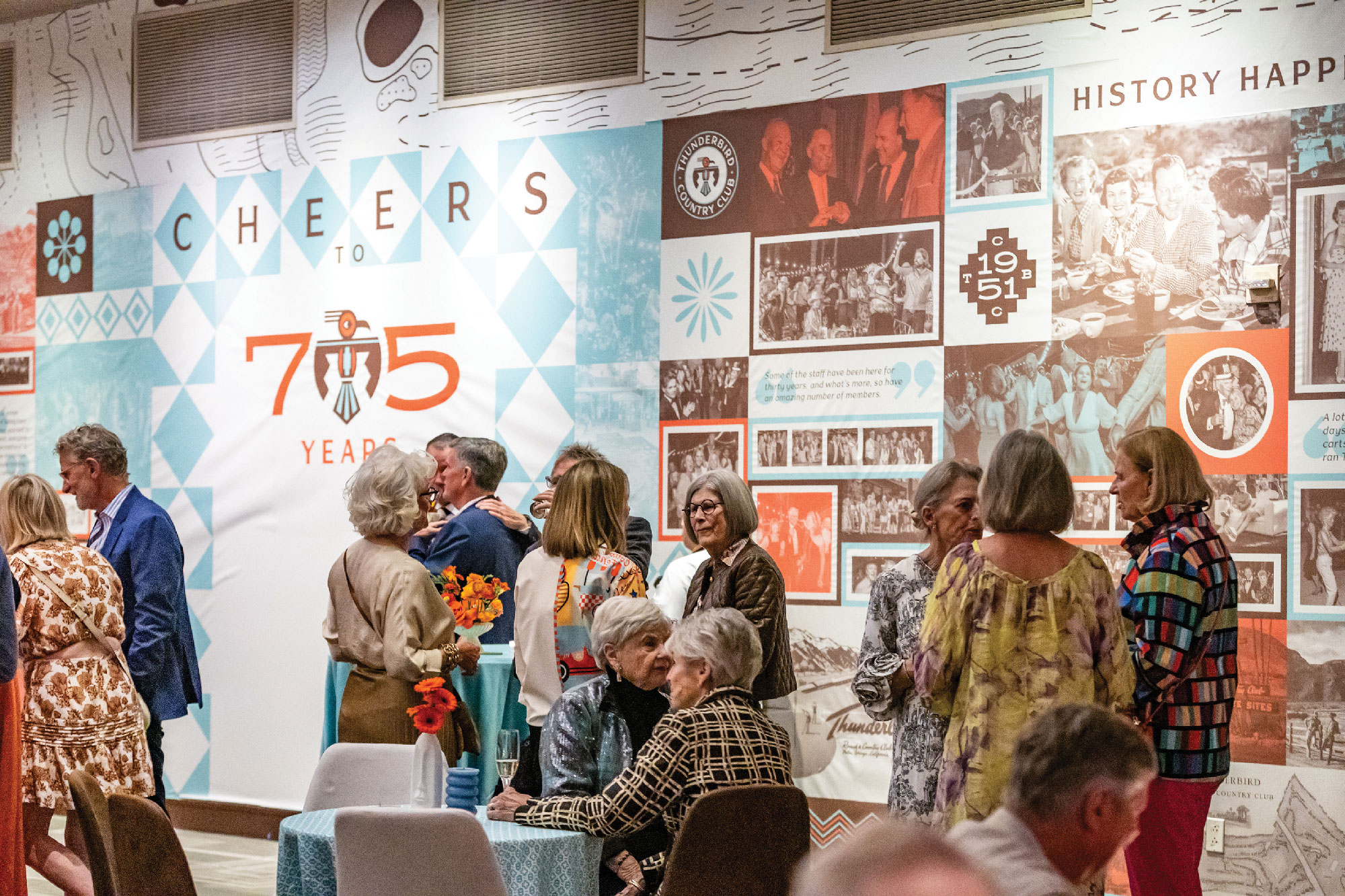
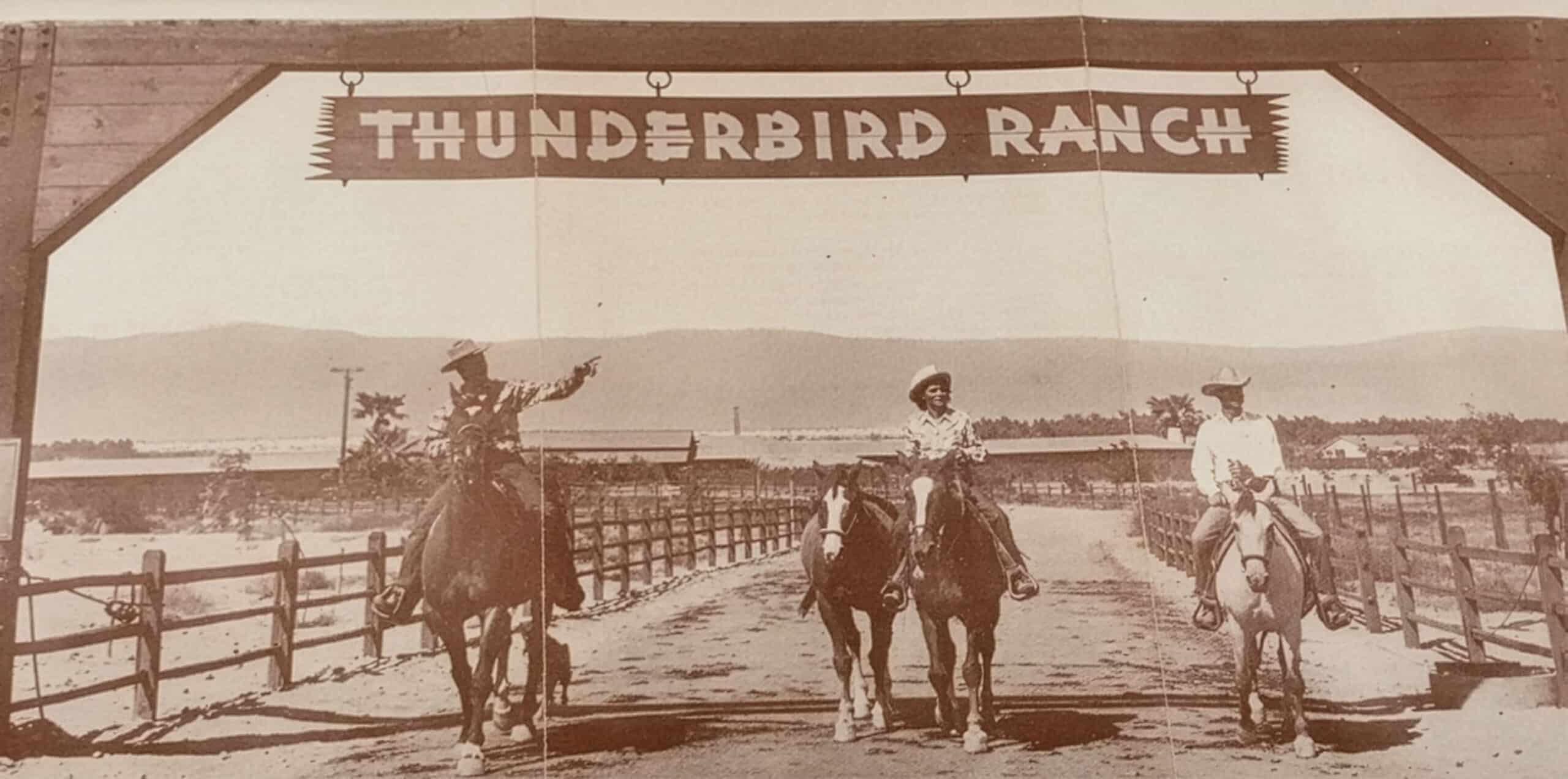
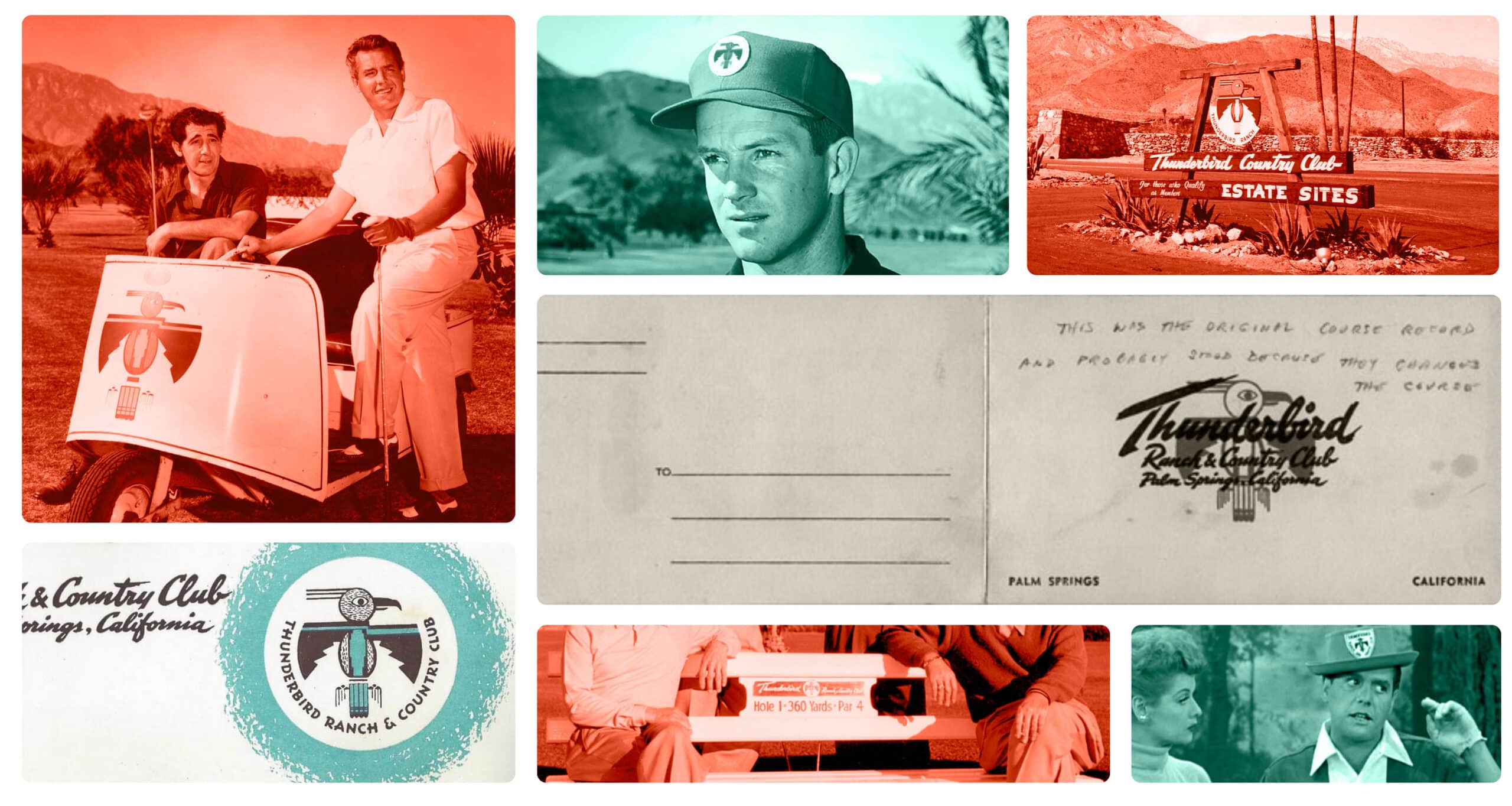
For seventy-five years, Thunderbird Country Club had been first—the first eighteen-hole golf course in Palm Springs, a home to presidents and Hollywood royalty, and the birthplace of the golf cart. They had the iconic Ford Thunderbird named after them and hosted the Ryder cup. For Thunderbird, being the first meant they had to be the best.
Then, their firsts dried up and the desert filled with competitors and became the center of the western golf universe. World-class facilities became table stakes. And “we’re the best” stopped being a fact and became something only a few were still familiar with.
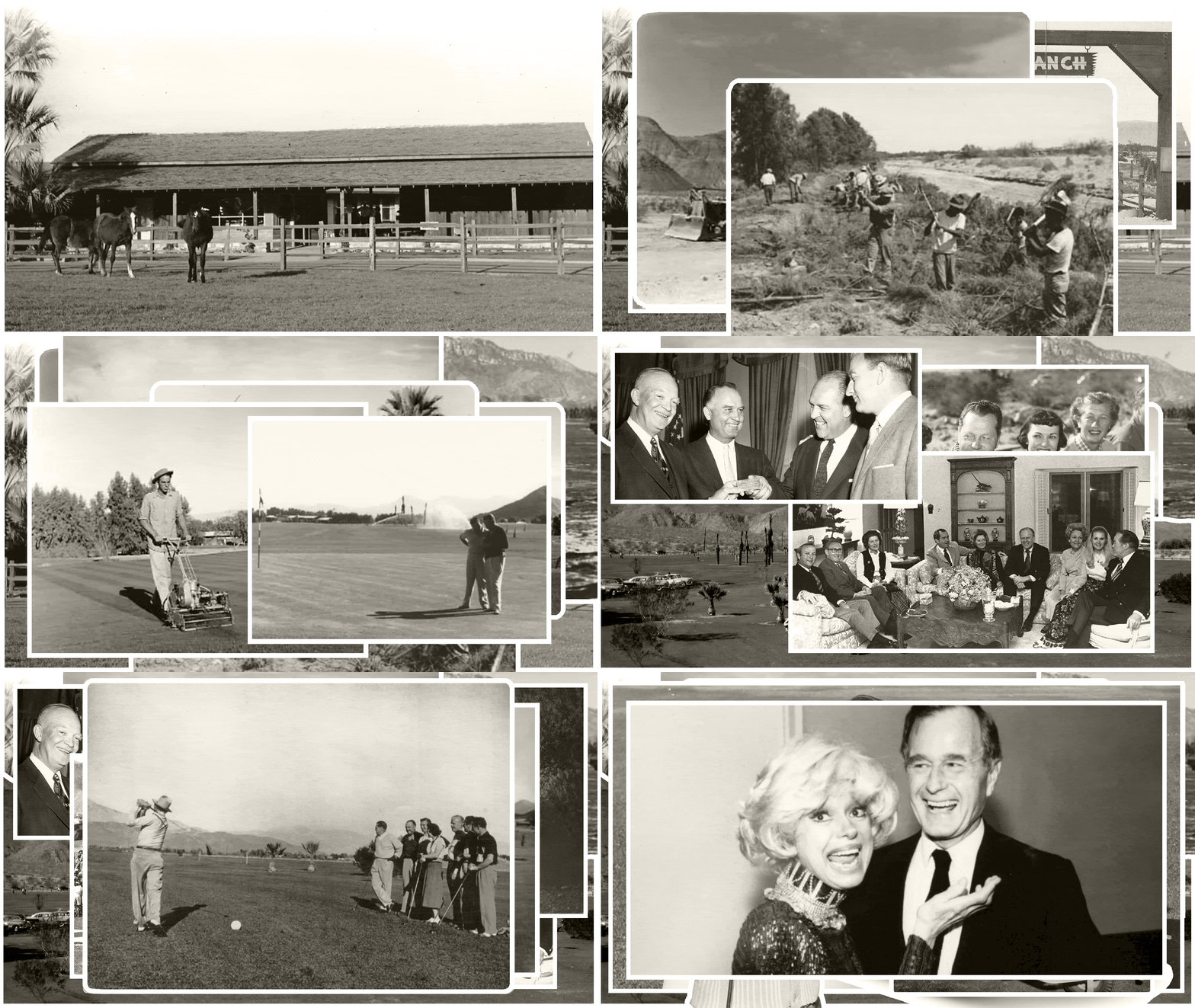
“First” had become a crutch rather than a credential
Leadership could not articulate what made the club different anymore aside from events that happened over half a century ago. Members pointed to people, warmth, and belonging, but struggled to explain why Thunderbird stood apart. The club was investing millions in renovations and their 75th anniversary, but one question kept surfacing: What are we renovating toward?
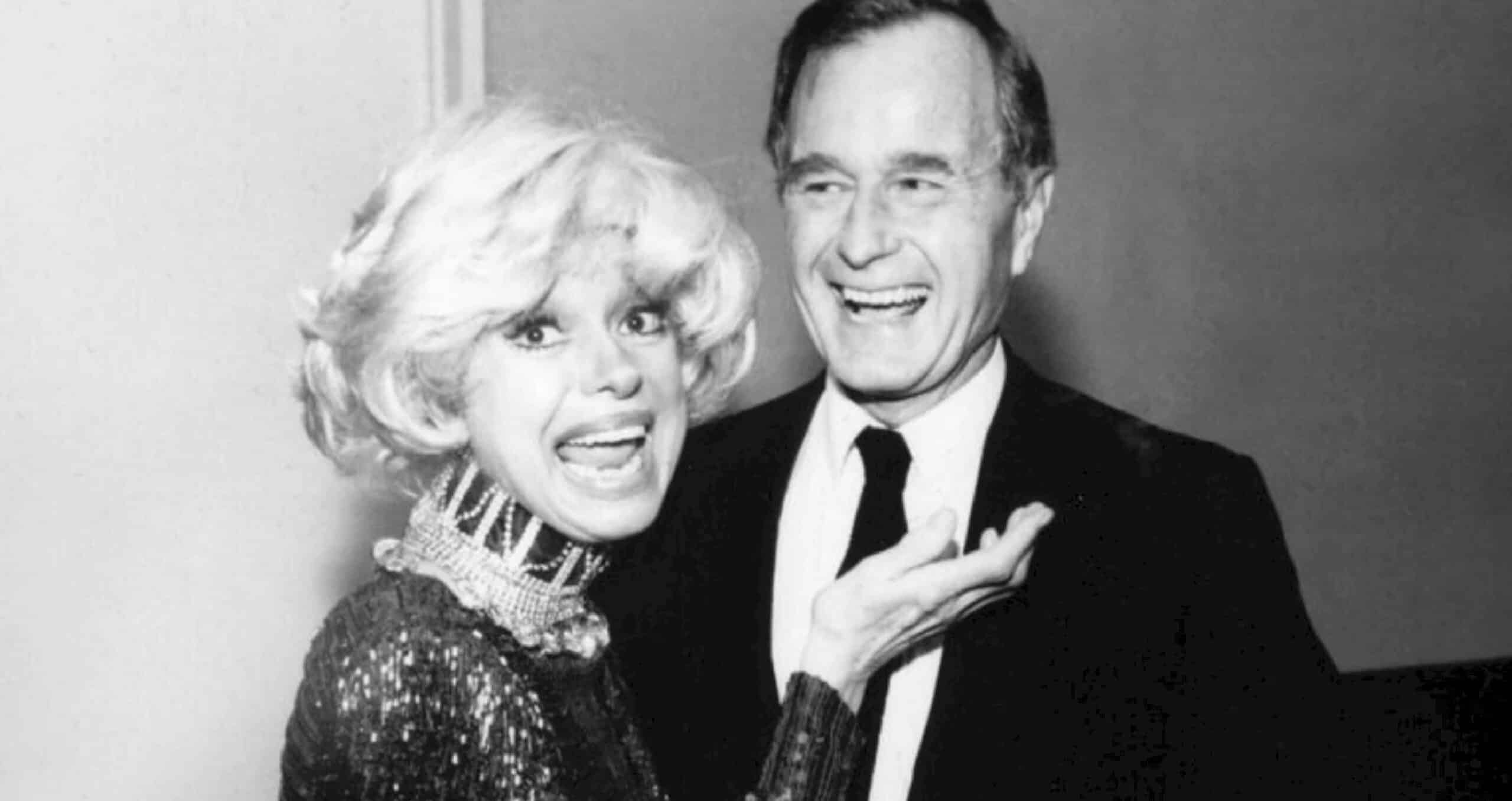
The community became Thunderbird’s story
Three months of strategic work revealed a pattern: members were not joining for Thunderbird’s amenities or for the club’s past accomplishments, although those were fantastic. Prospects were joining for how the membership made them feel. 85% believed Thunderbird was the premier club in the area, but their reasons rarely started with “because we were the original.” They talked about people first, staff second, and history third. The club had been leading with the wrong message. Thunderbird was not special because it was first. It was special because it never stopped evolving. Being first gave them permission to innovate. Innovation created the community.
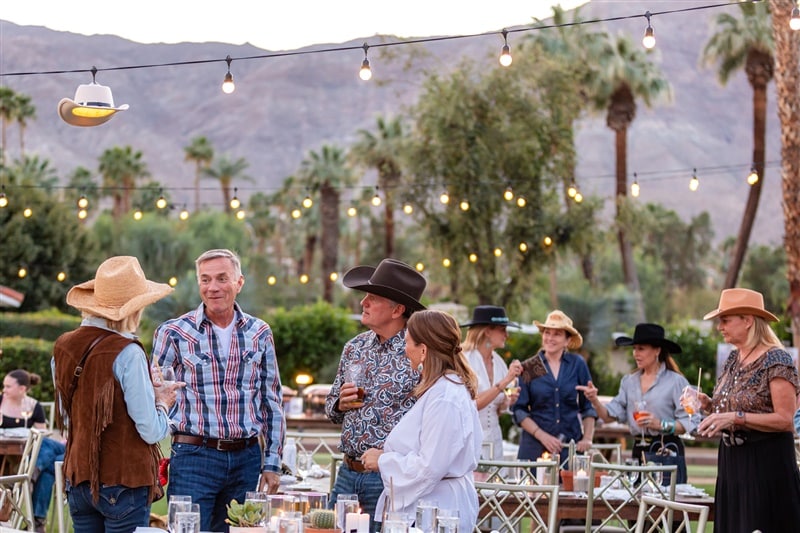
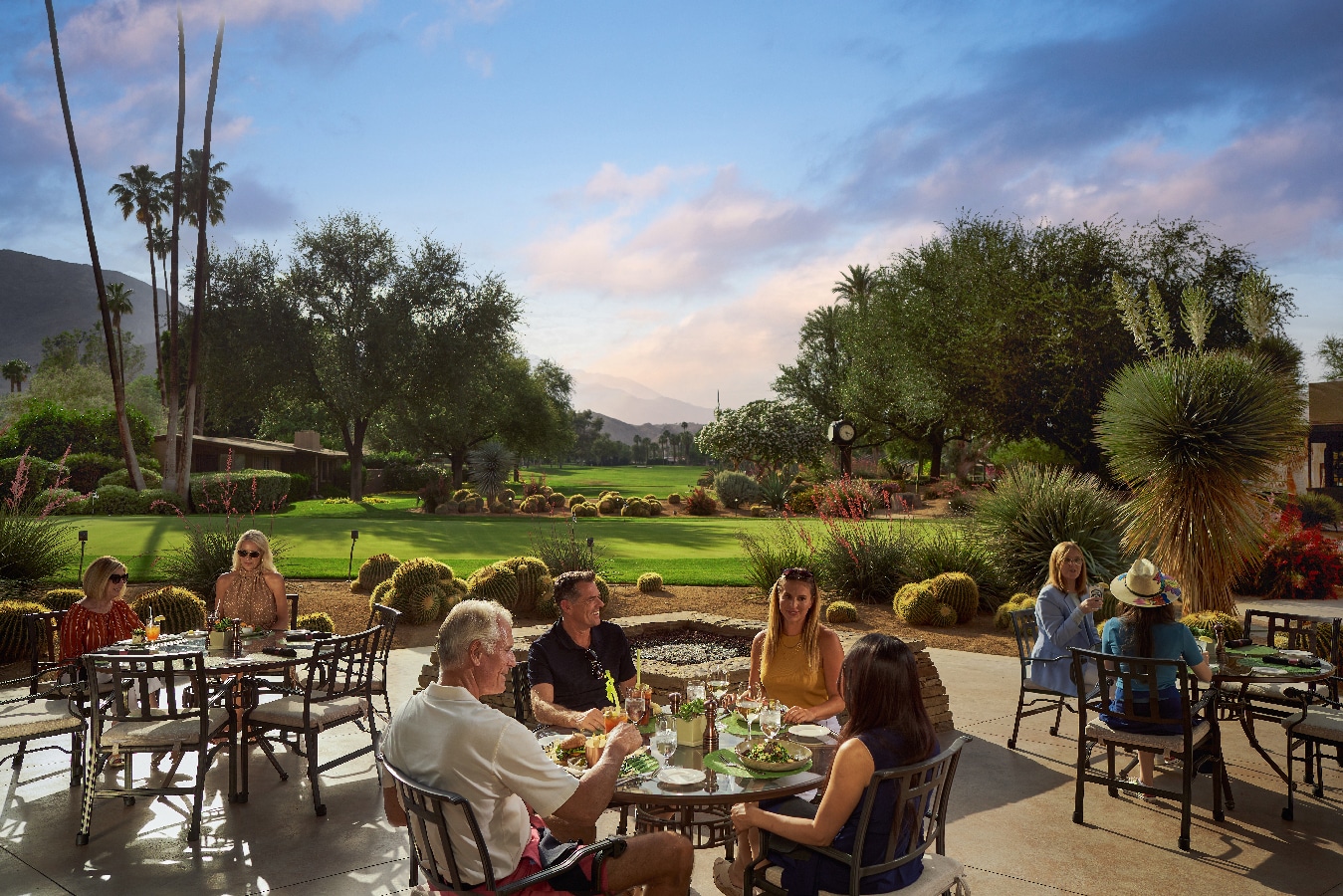
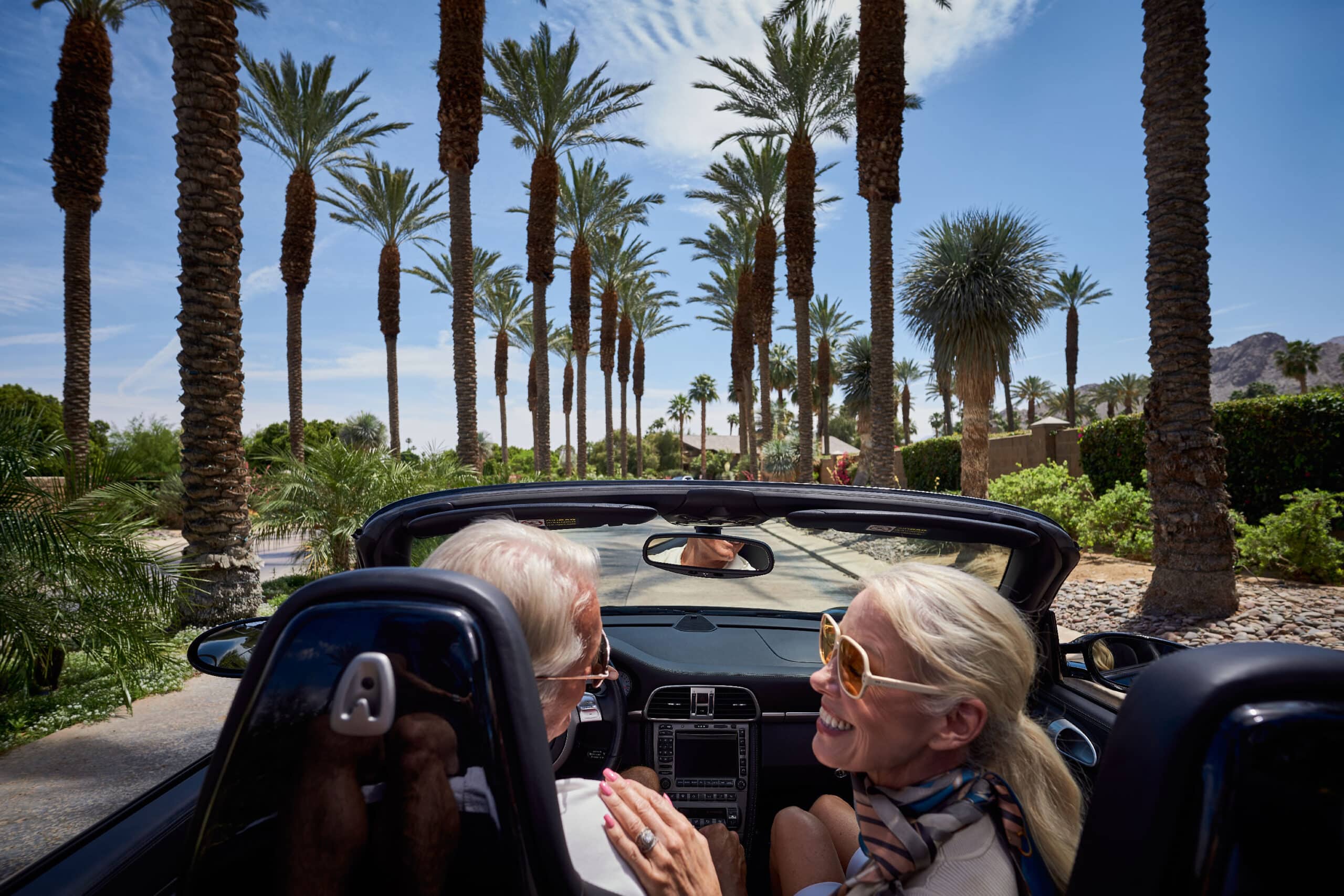

Evolving for the future
We reframed “first” from historical fact to living value: pioneering spirit and the confidence to keep evolving. We built positioning around the tension members lived: where mid-century meets modern. We named five cultural attributes that became decision filters for everything from programming to capital planning. That strategic clarity then shaped how Thunderbird looks, sounds, and feels.
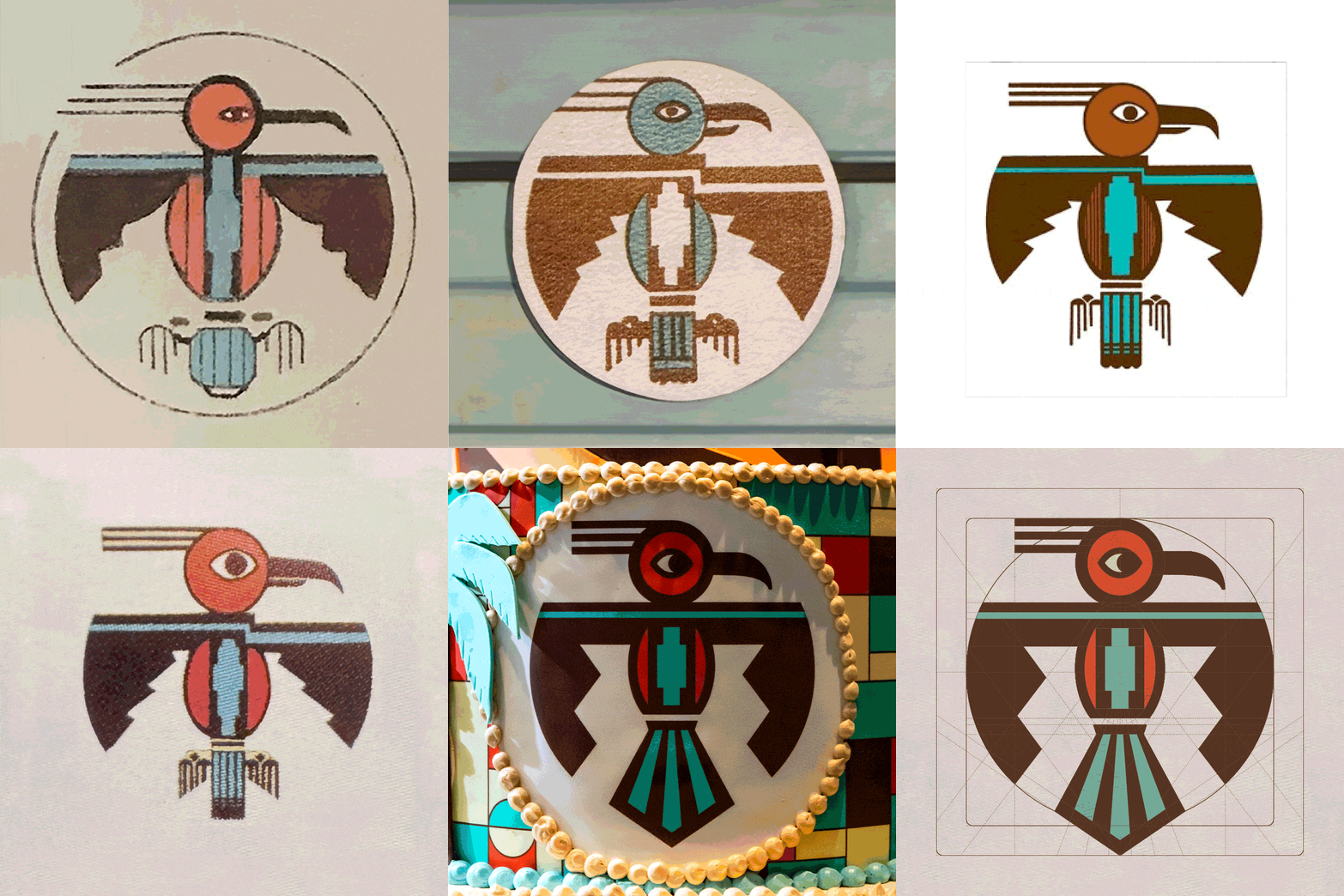
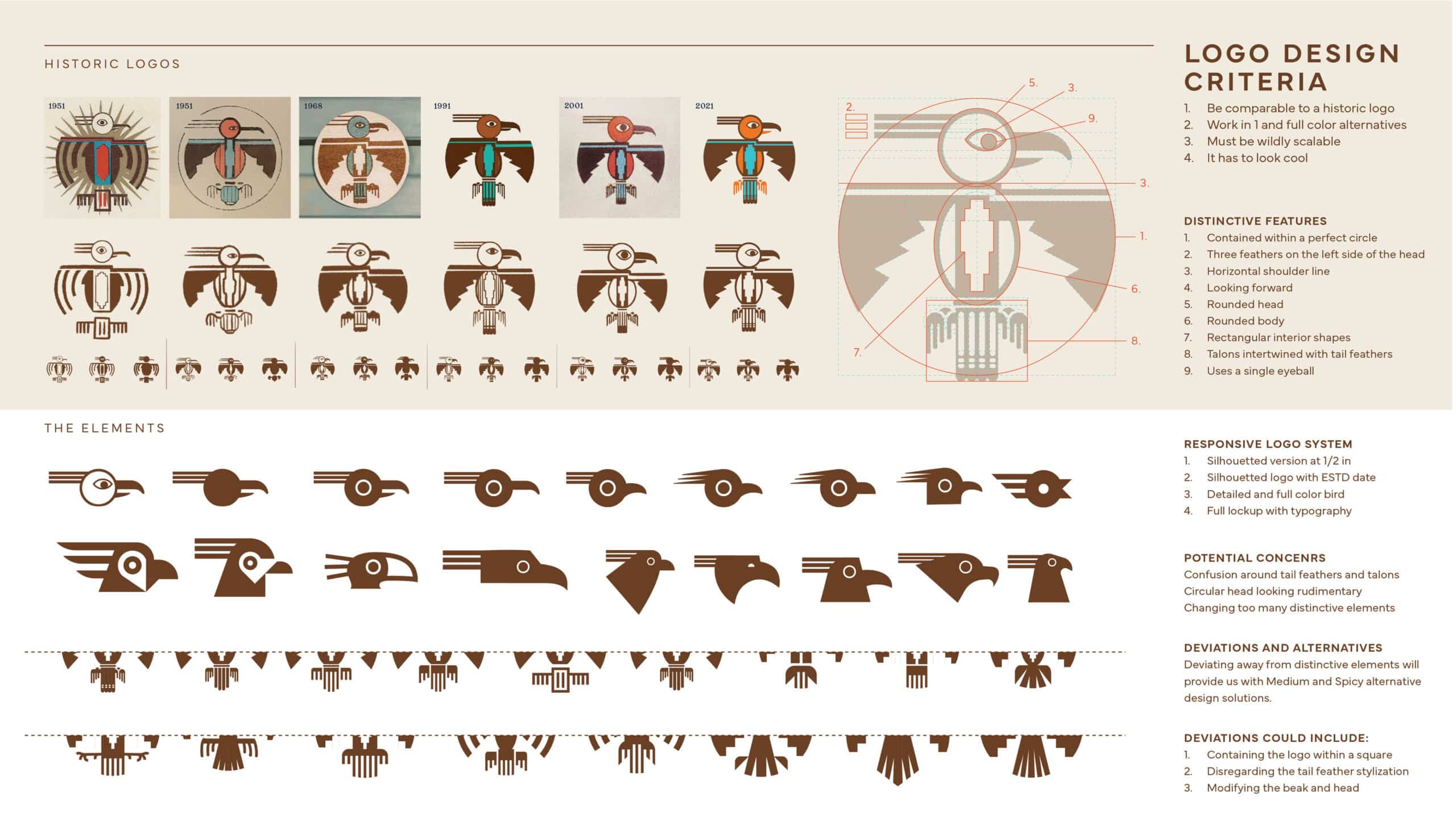
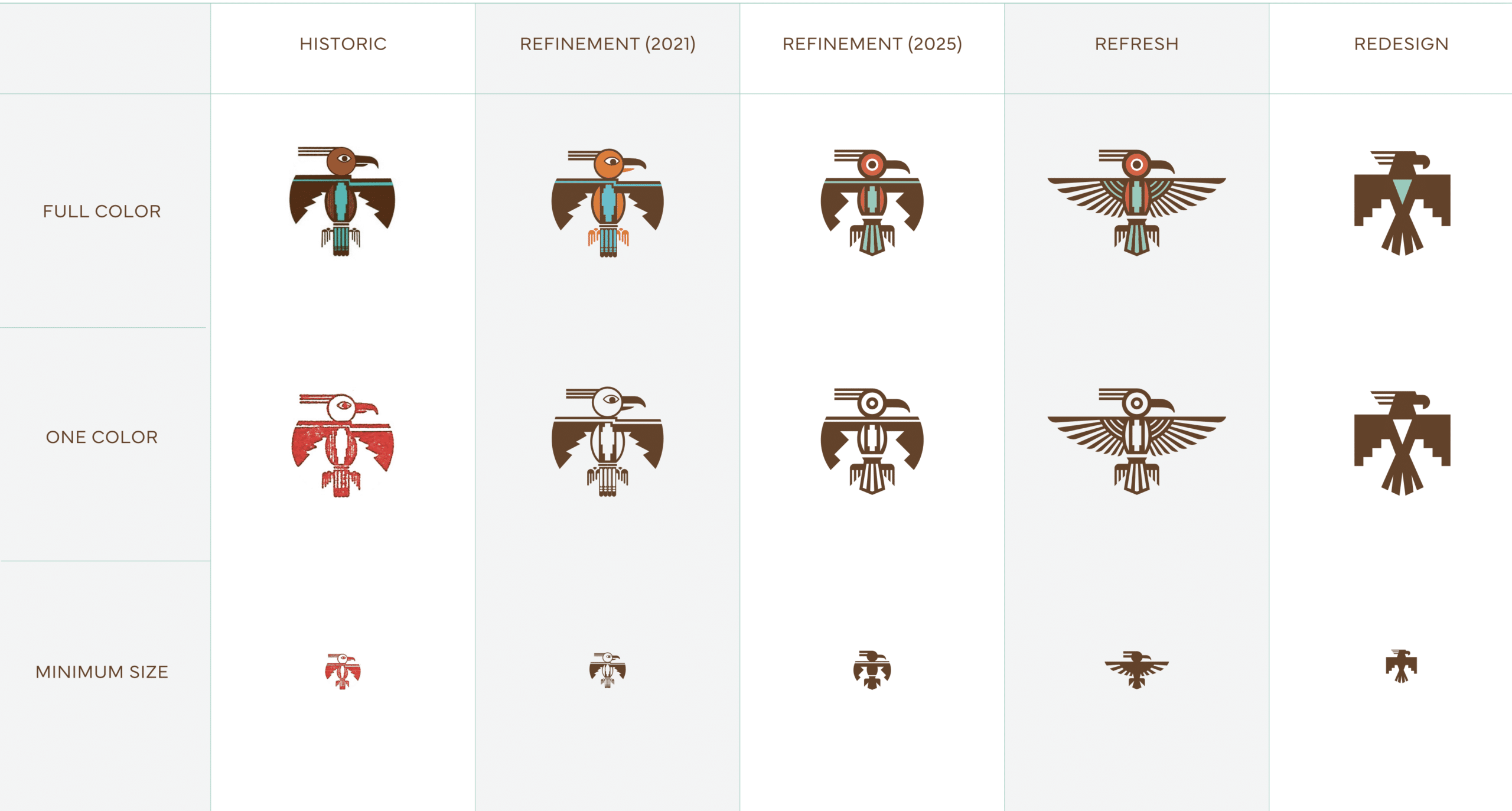
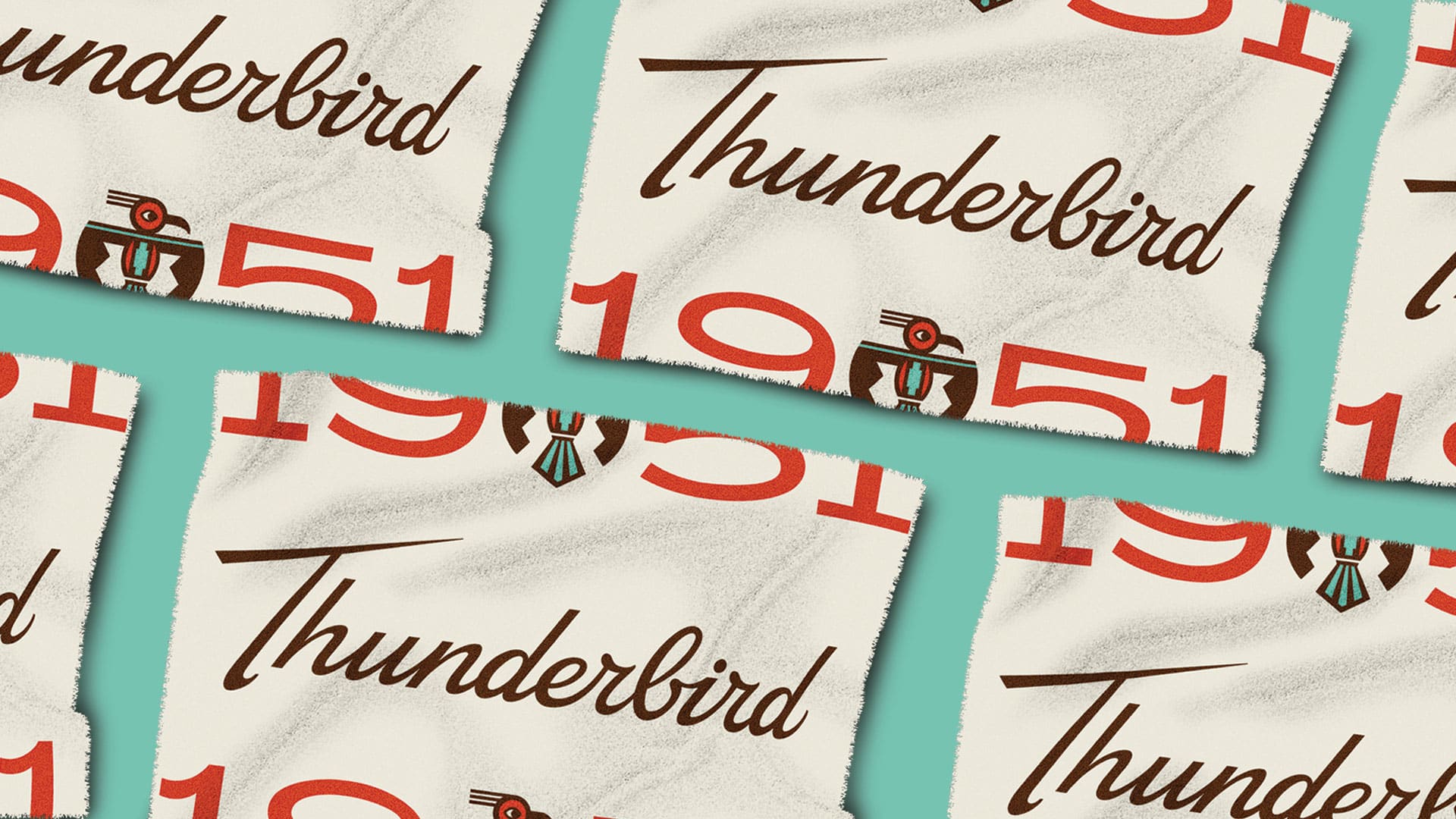
The iconic Thunderbird logo had unintentionally evolved over the last 75 years.
So, we studied those changes.
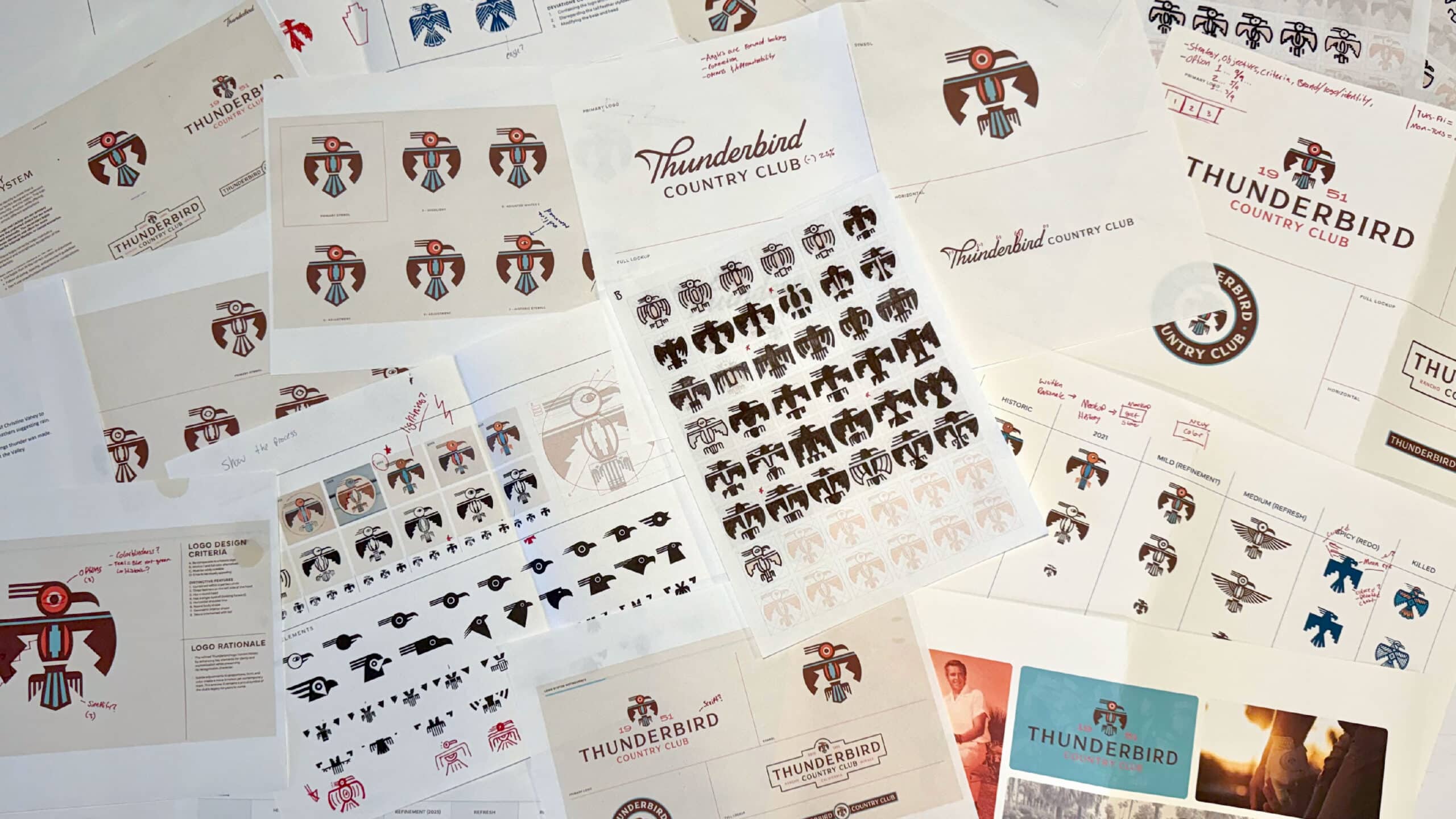
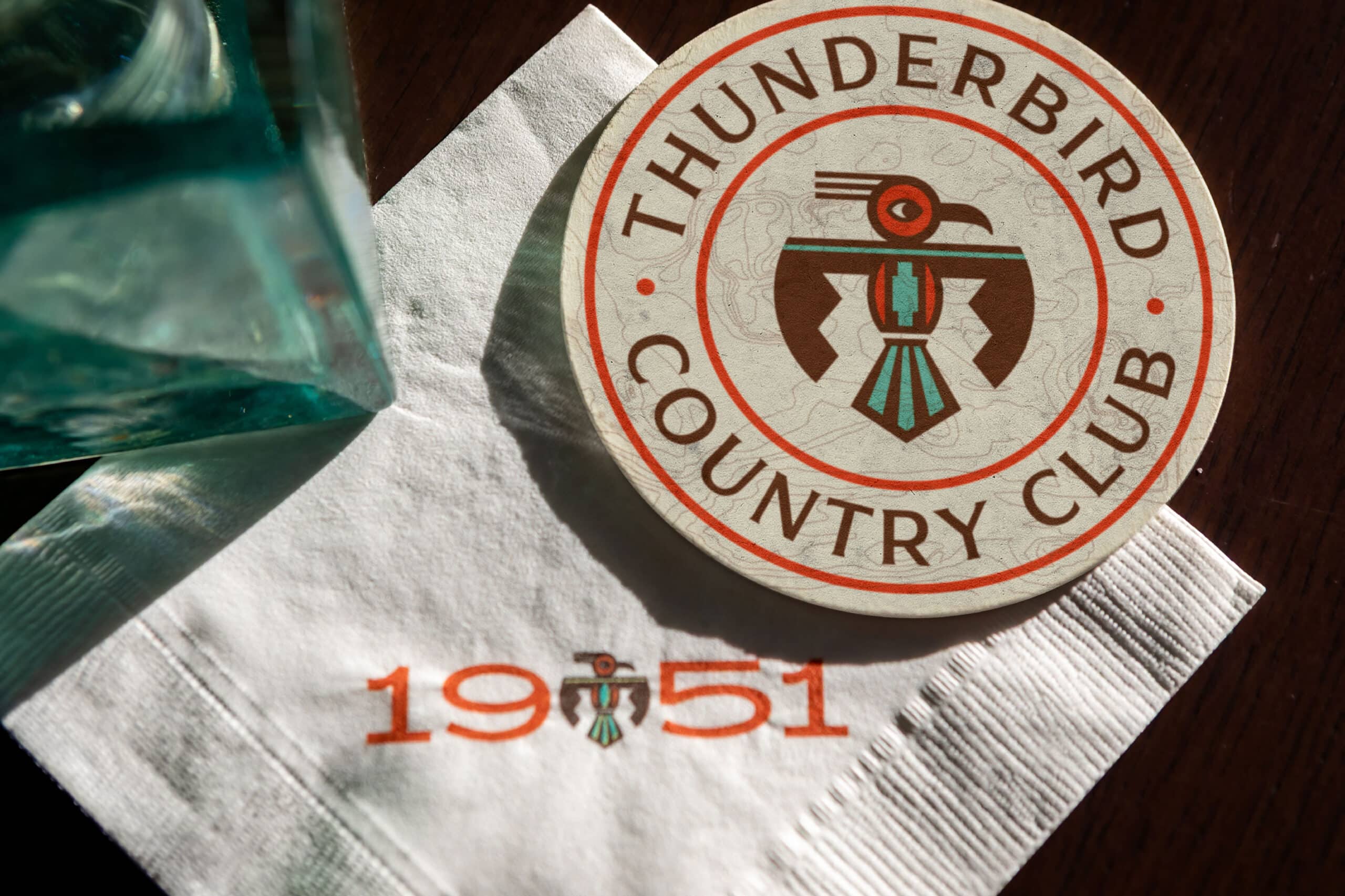
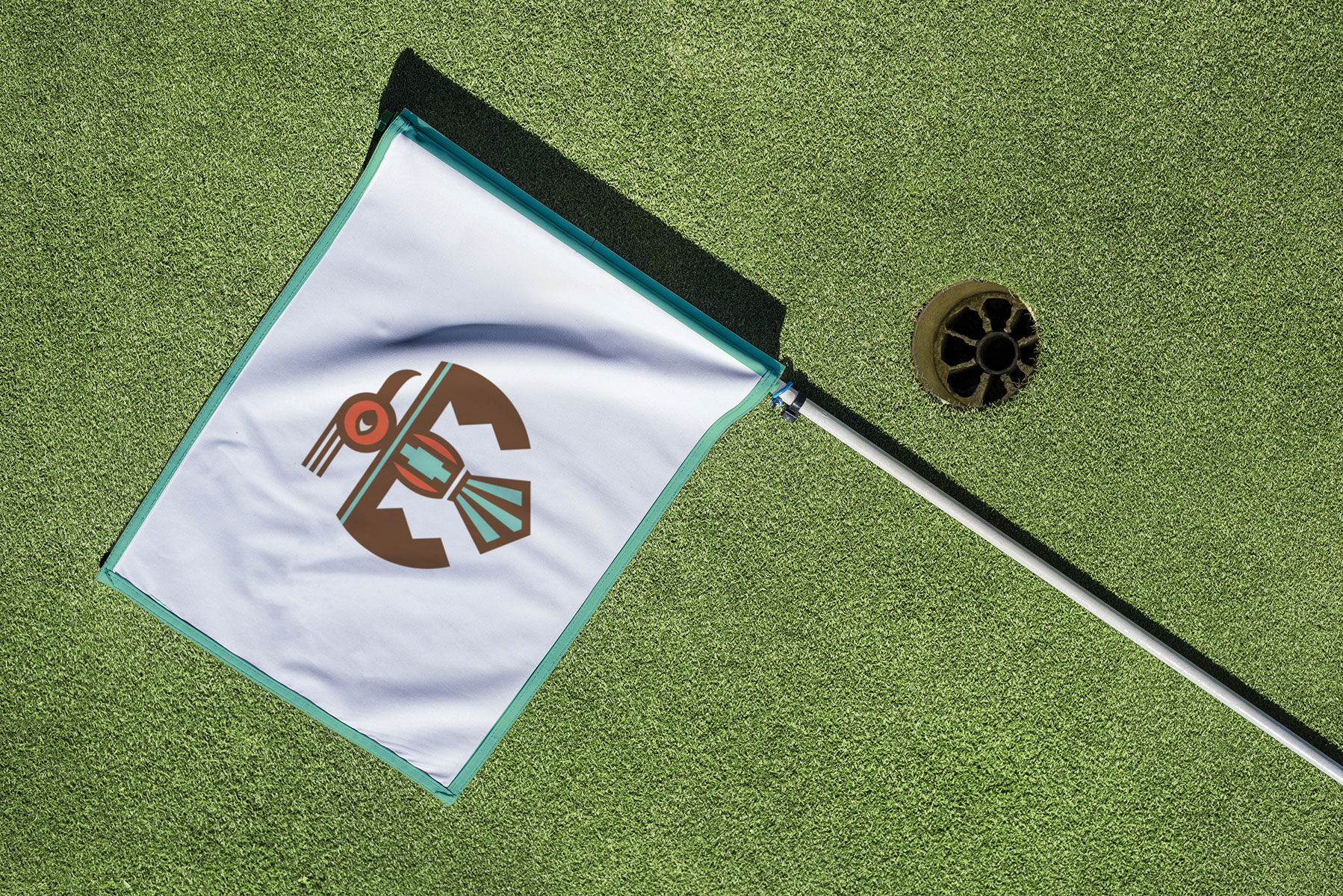
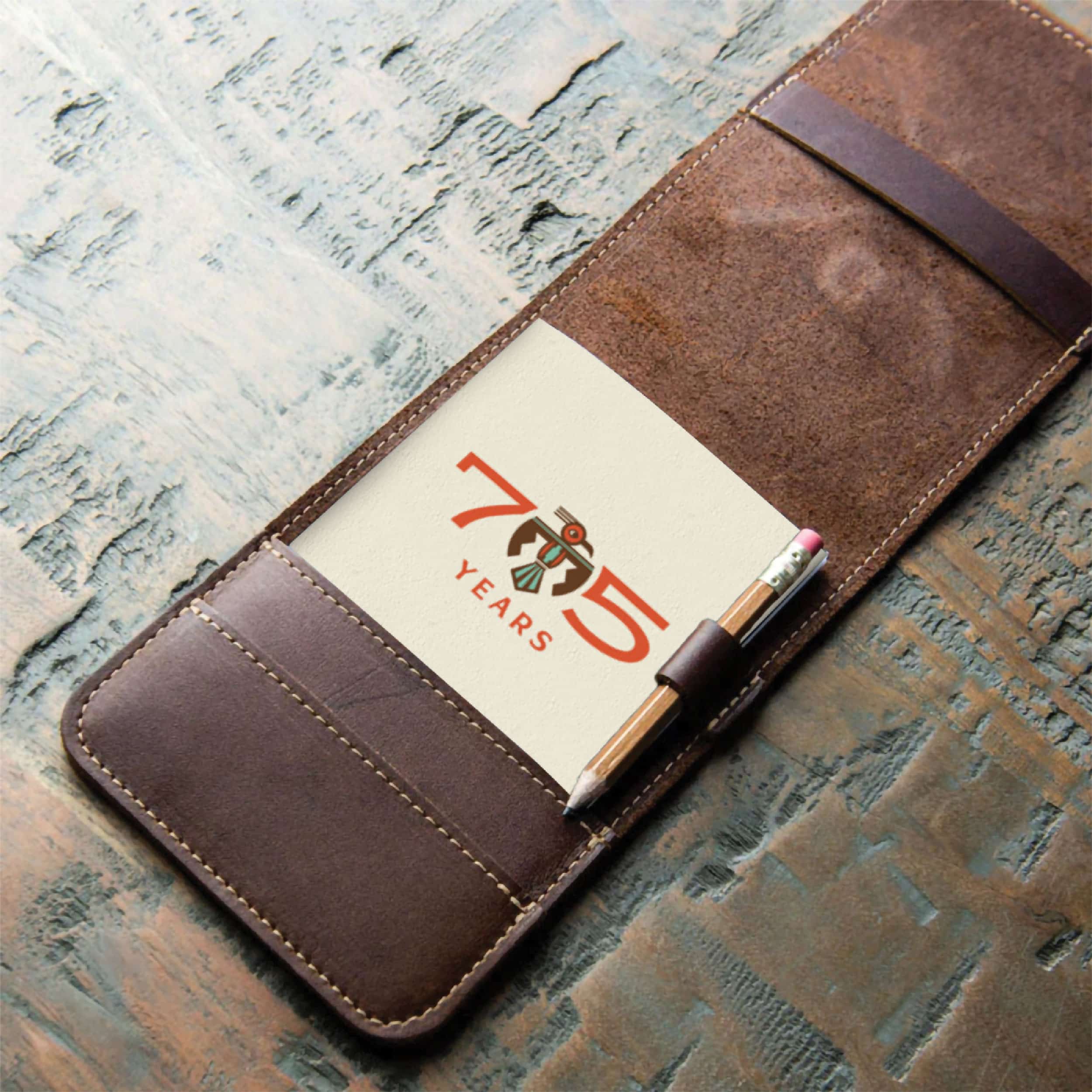
We focused on the details that made this mark truly special. This time intentionally, we took that research and simplified the mark for modern application while remaining instantly recognizable to its historic roots. Our objective was to honor the past while innovating for the future.
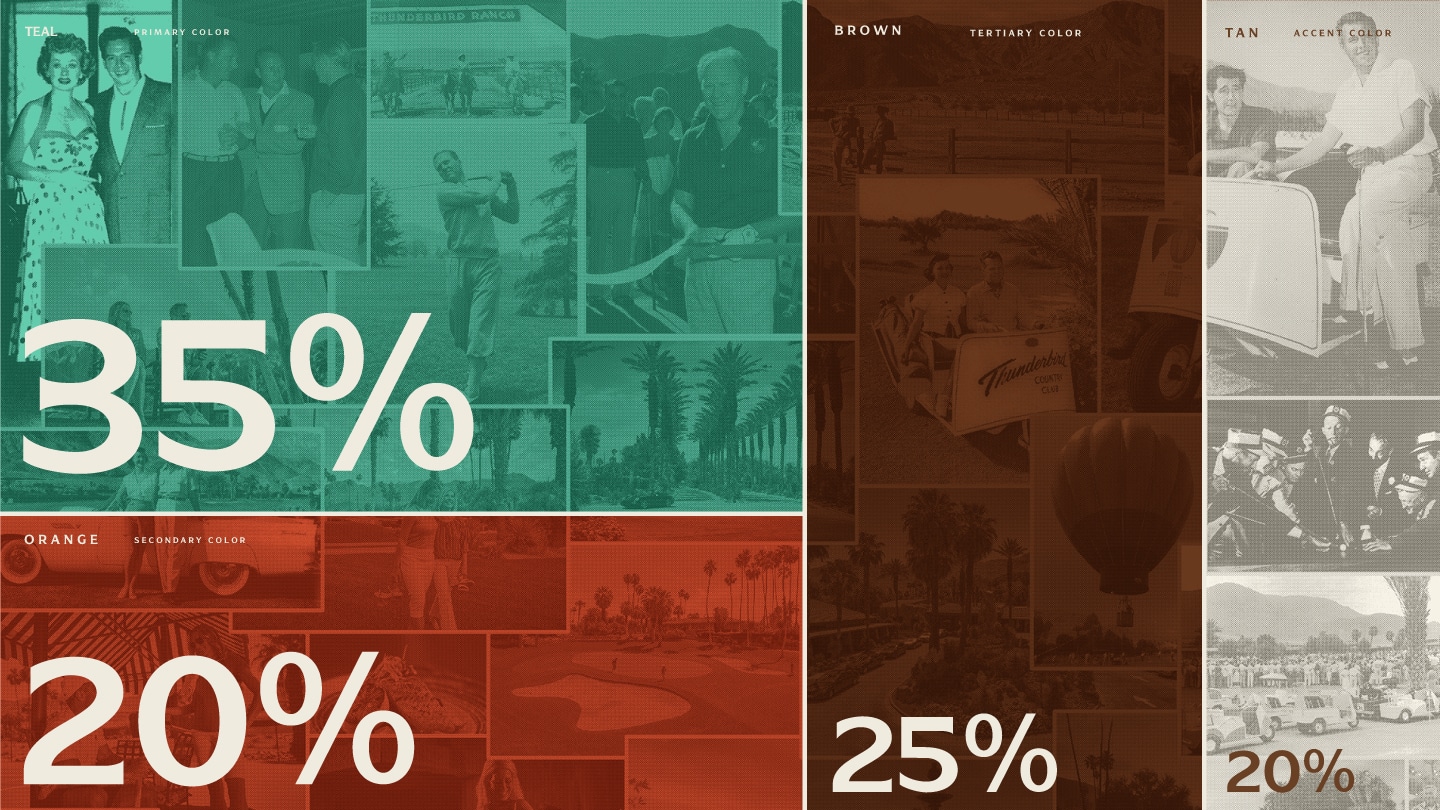
Their palette was always rooted in the land.
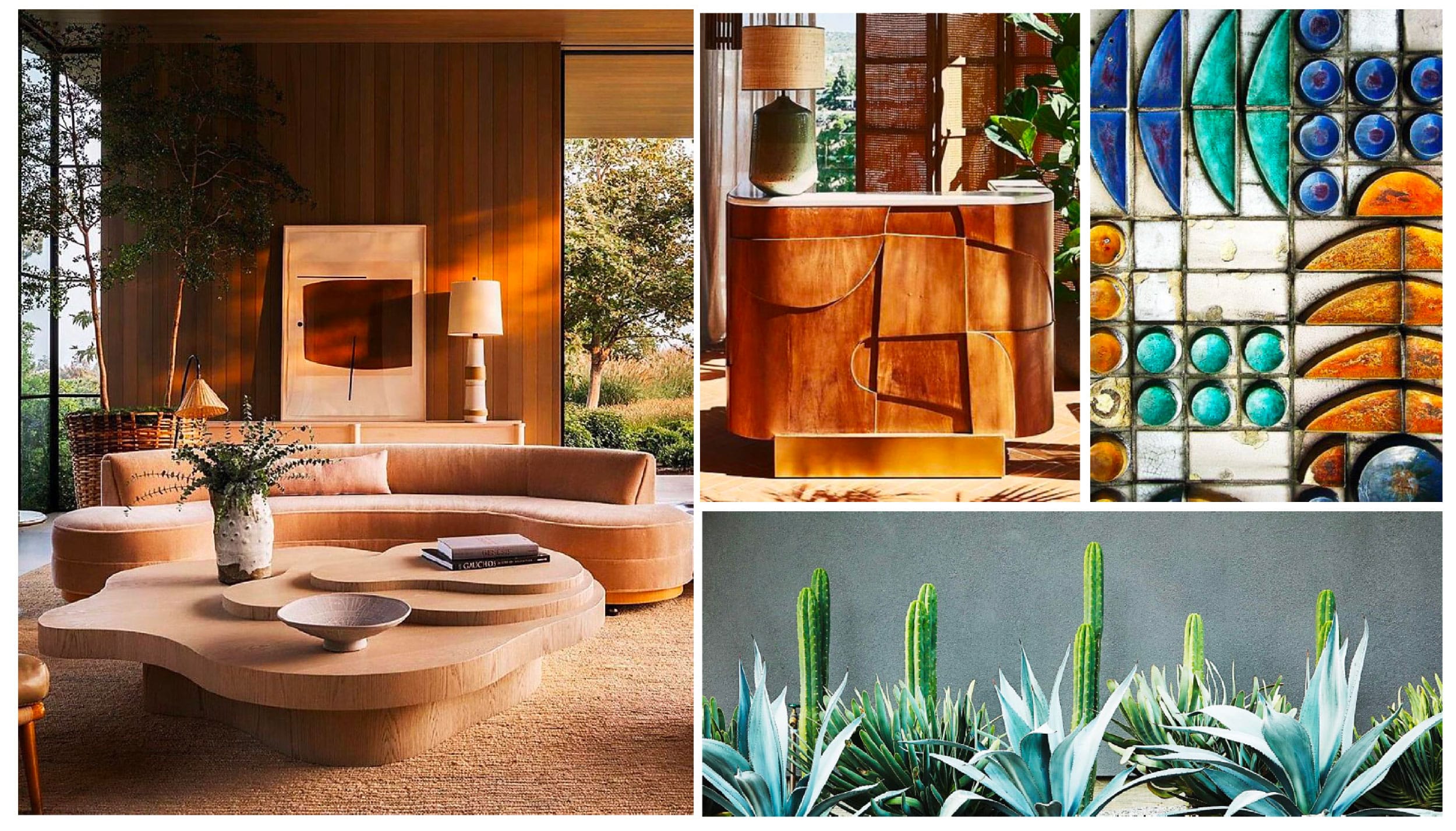
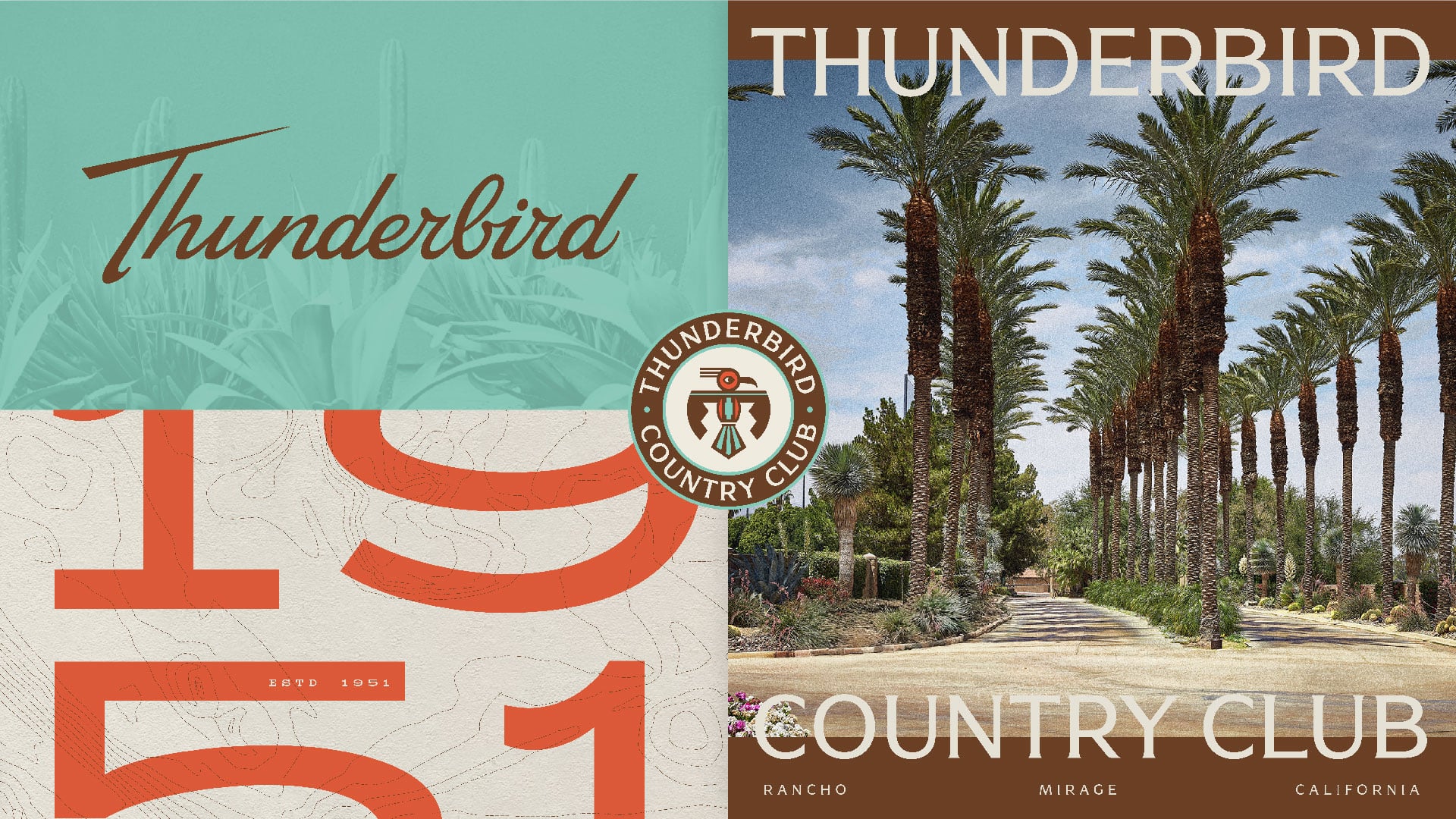
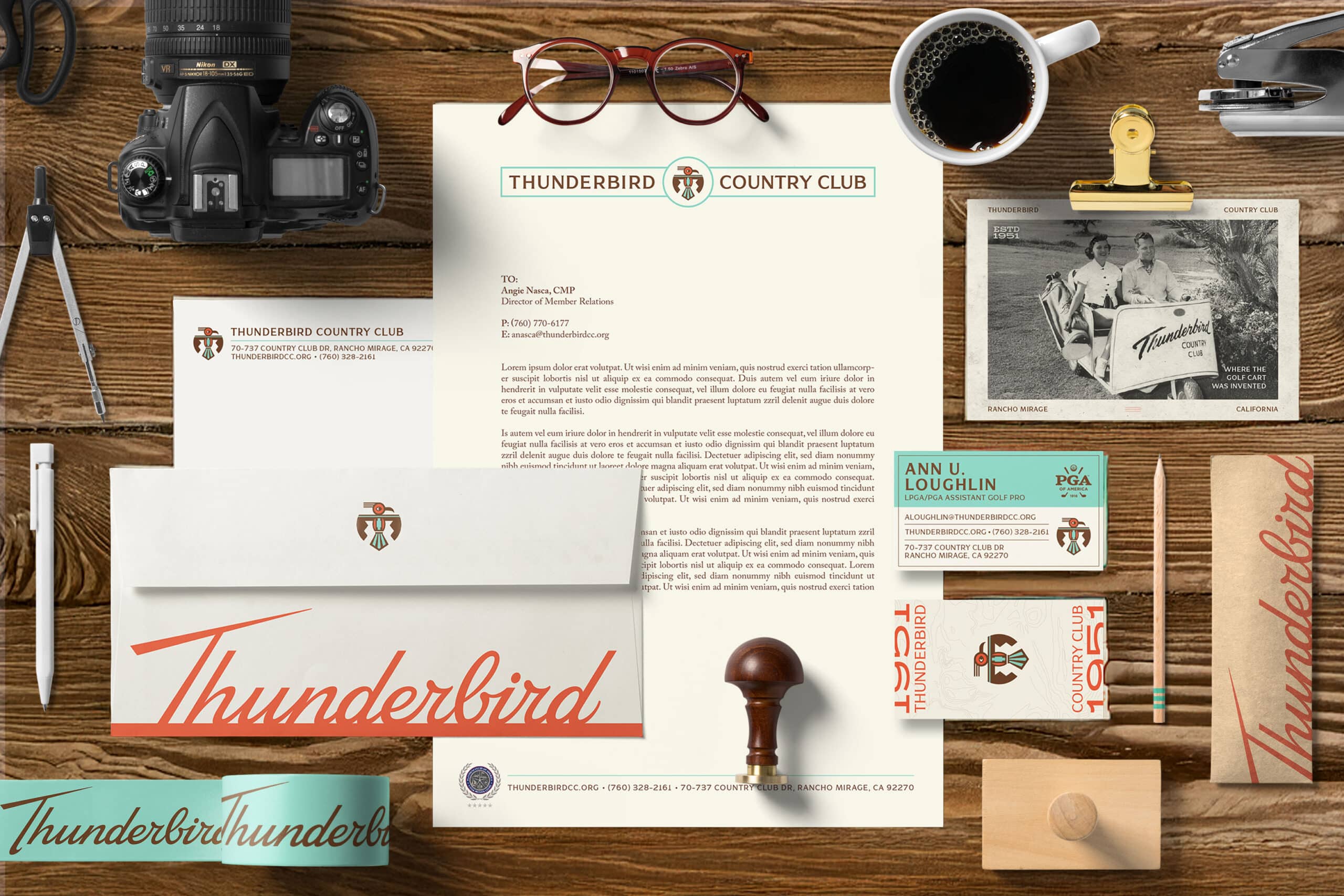
Their palette was close, but needed to look back so they could move forward. The brand colors drew from 75 years of the club’s history and the desert landscape itself: mid-century turquoise and orange paired with warm earth tones that were inspired by the surrounding terrain. The revised color palette is classic yet modern. Familiar yet fresh.
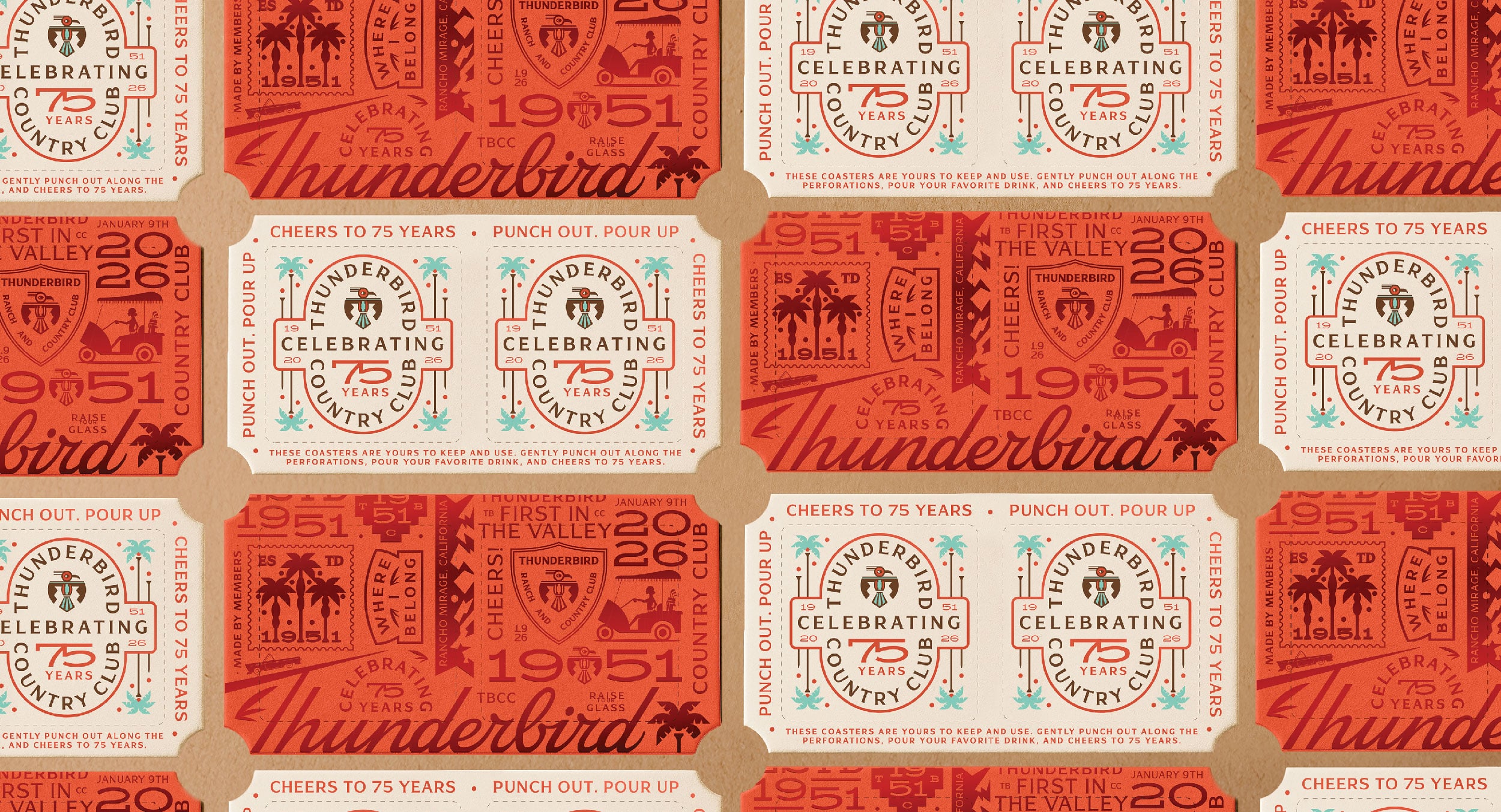
Every element works towards one goal.
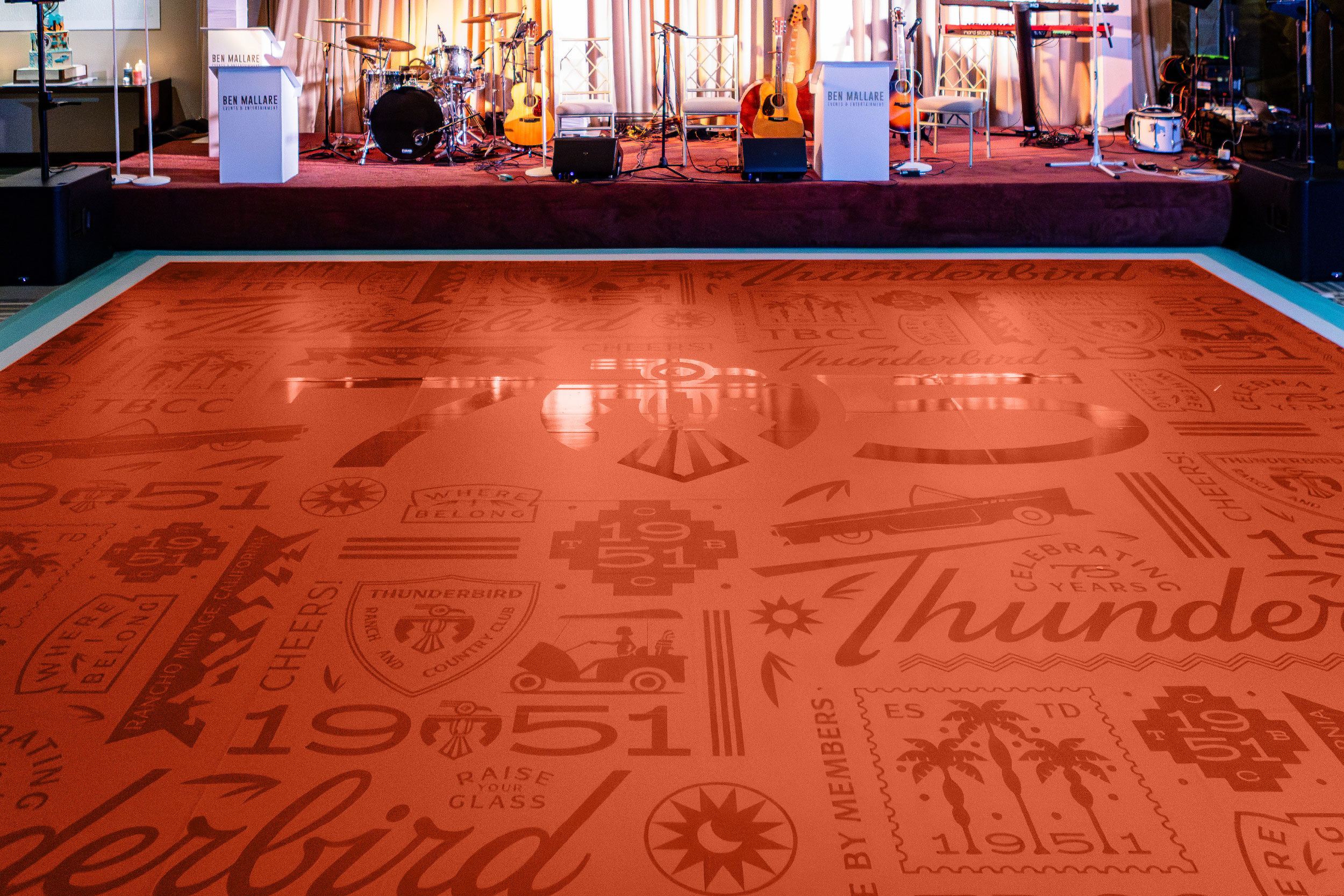
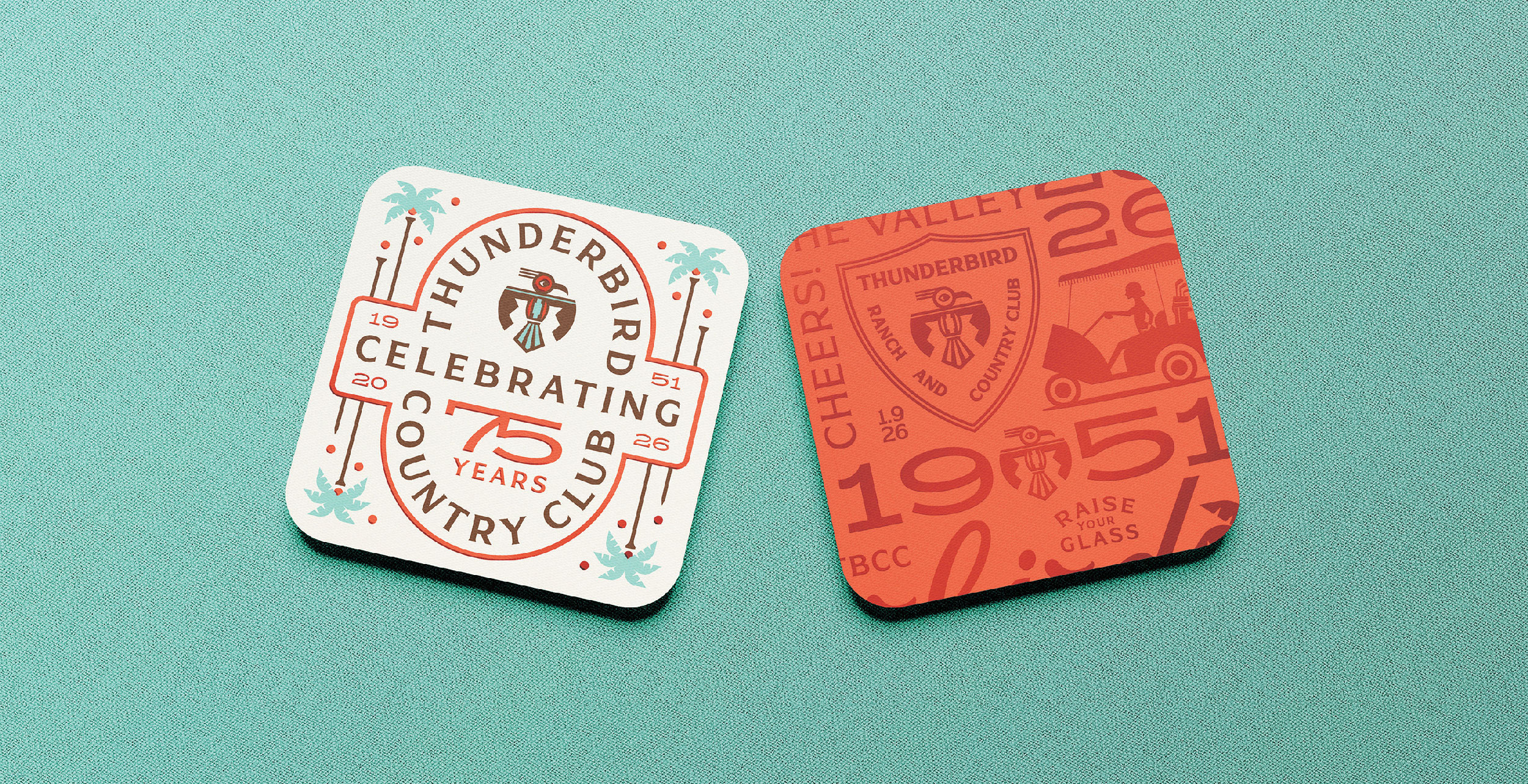
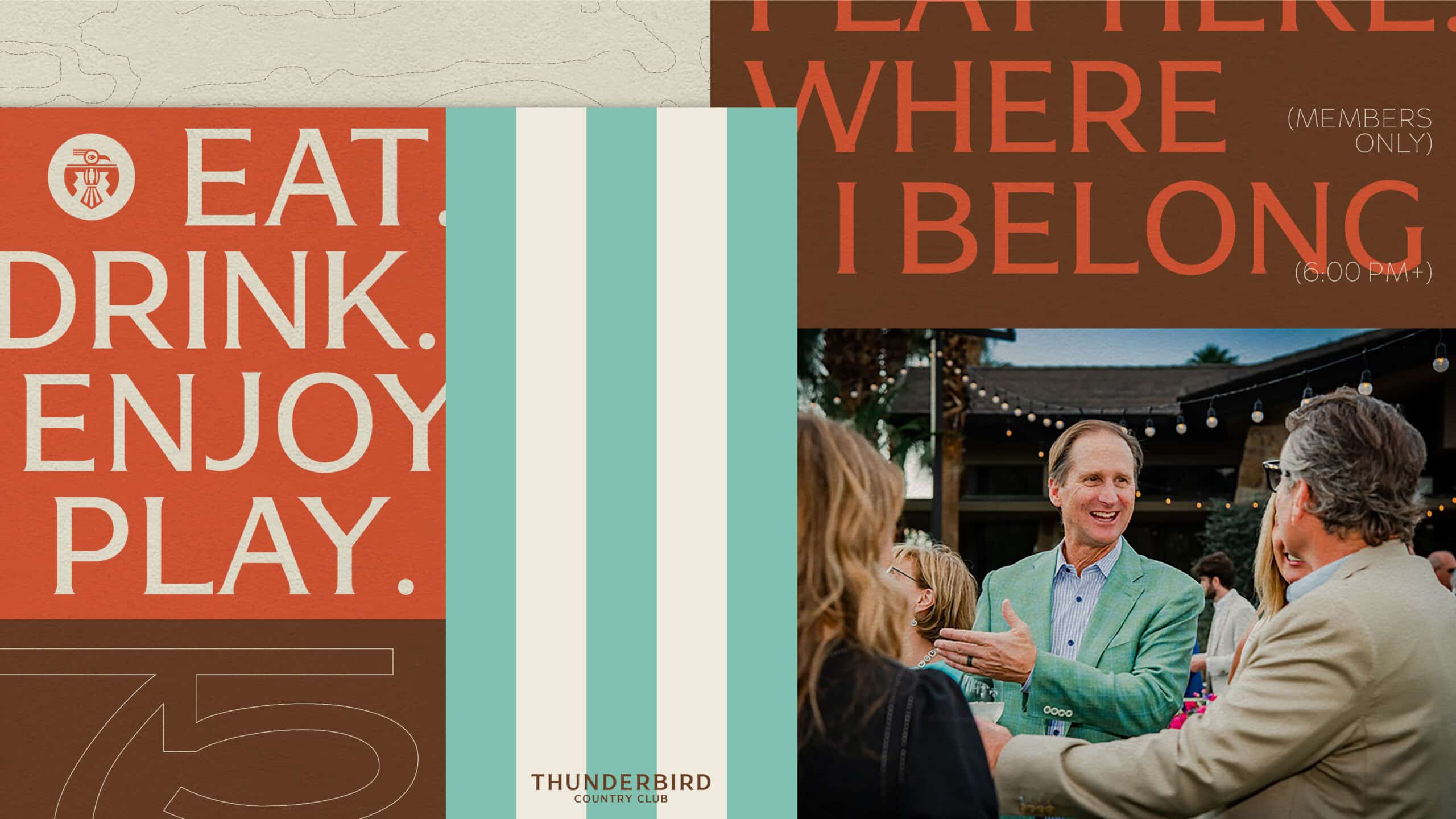
Each element has a story, and every design has a purpose. Collectively, these assets work together to build Thunderbird’s brand identity. Thunderbird’s patterns and textures were inspired from the topography of the land the club was founded on, photography that leans into the beautiful mountain landscape, and visual elements that make the setting feel inseparable from the identity.


Verbal Identity: “Where I Belong”
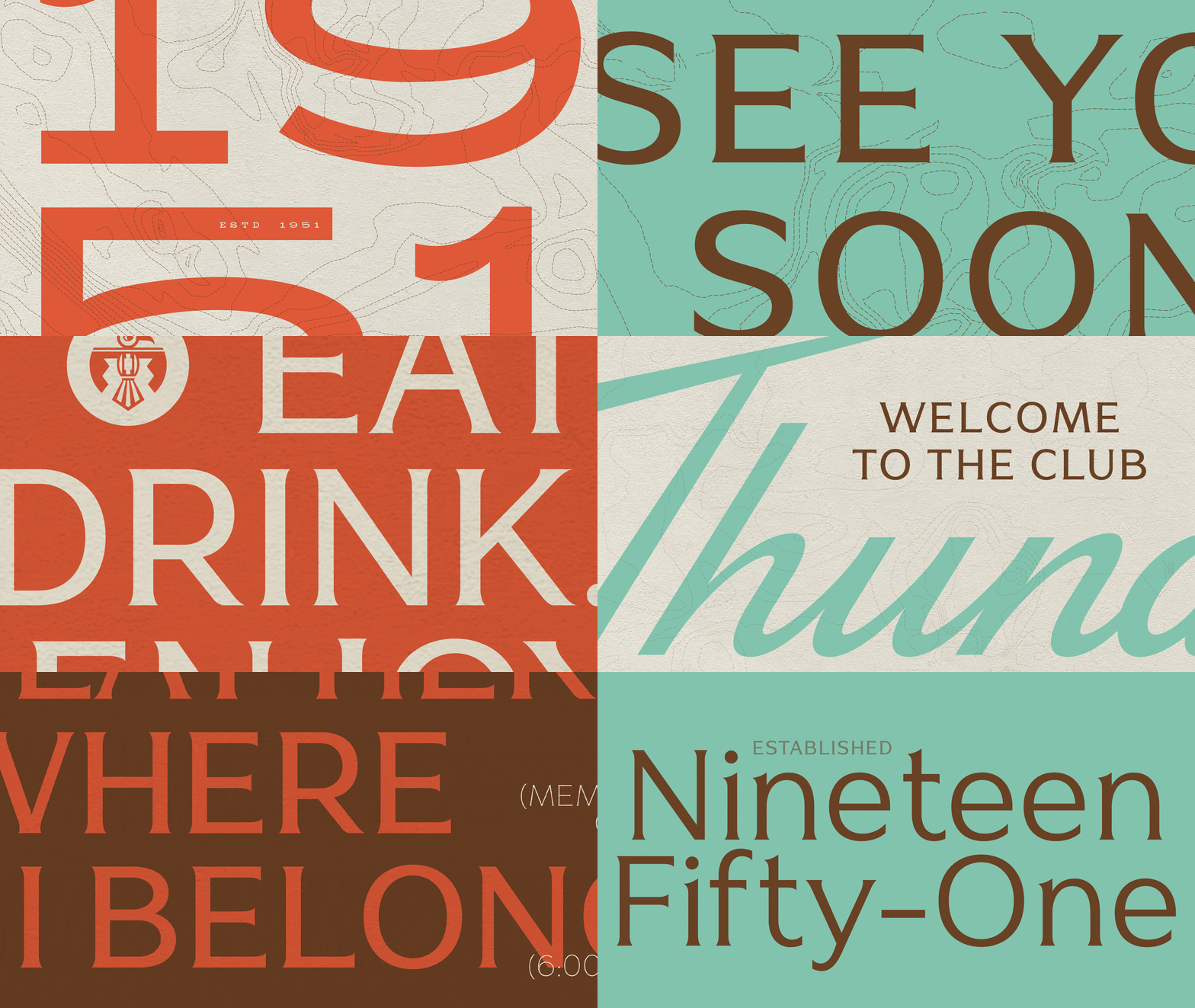
The club’s voice shifted from formal and historic to conversational and story-driven. We asked: What if Thunderbird communicated like the best storyteller at a historic bar? Warm, welcoming, like an old friend you have not seen in years, drawing you in with great stories. Personal connection over status. Belonging over prestige.
Headlines now read like invitations:
“Where friendships flourish.”
“Where a first-name basis is the only basis.”
“A Hollywood history and a brighter future.”
The language reflects how members actually talk about the place they love. The member motto: “Where I Belong.” Simple. Personal. Present tense. What we say is just as important as how we say it. Every touchpoint is considered, from “Welcome back,” to “See you soon.”
Member Experience: Belonging from Day One
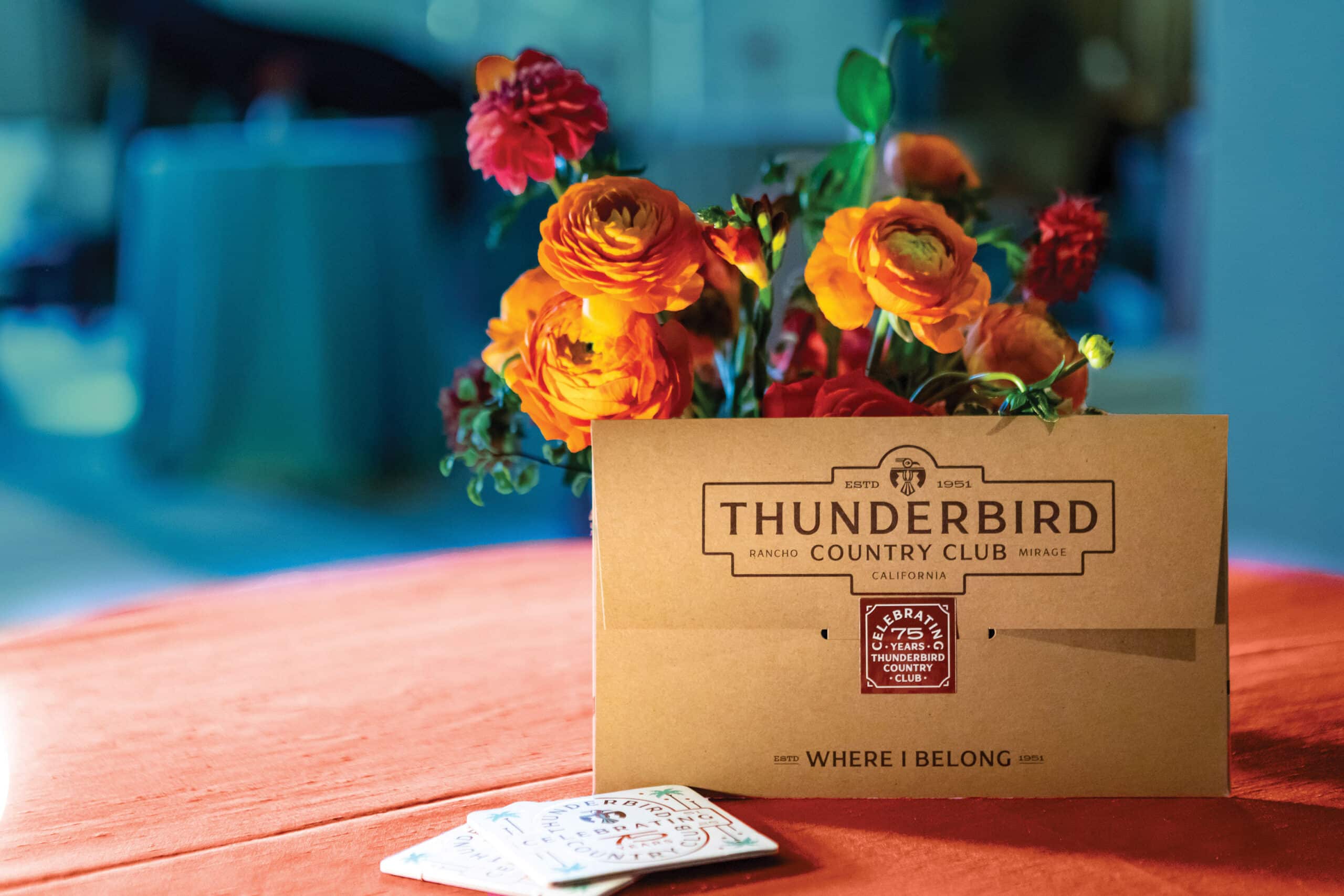
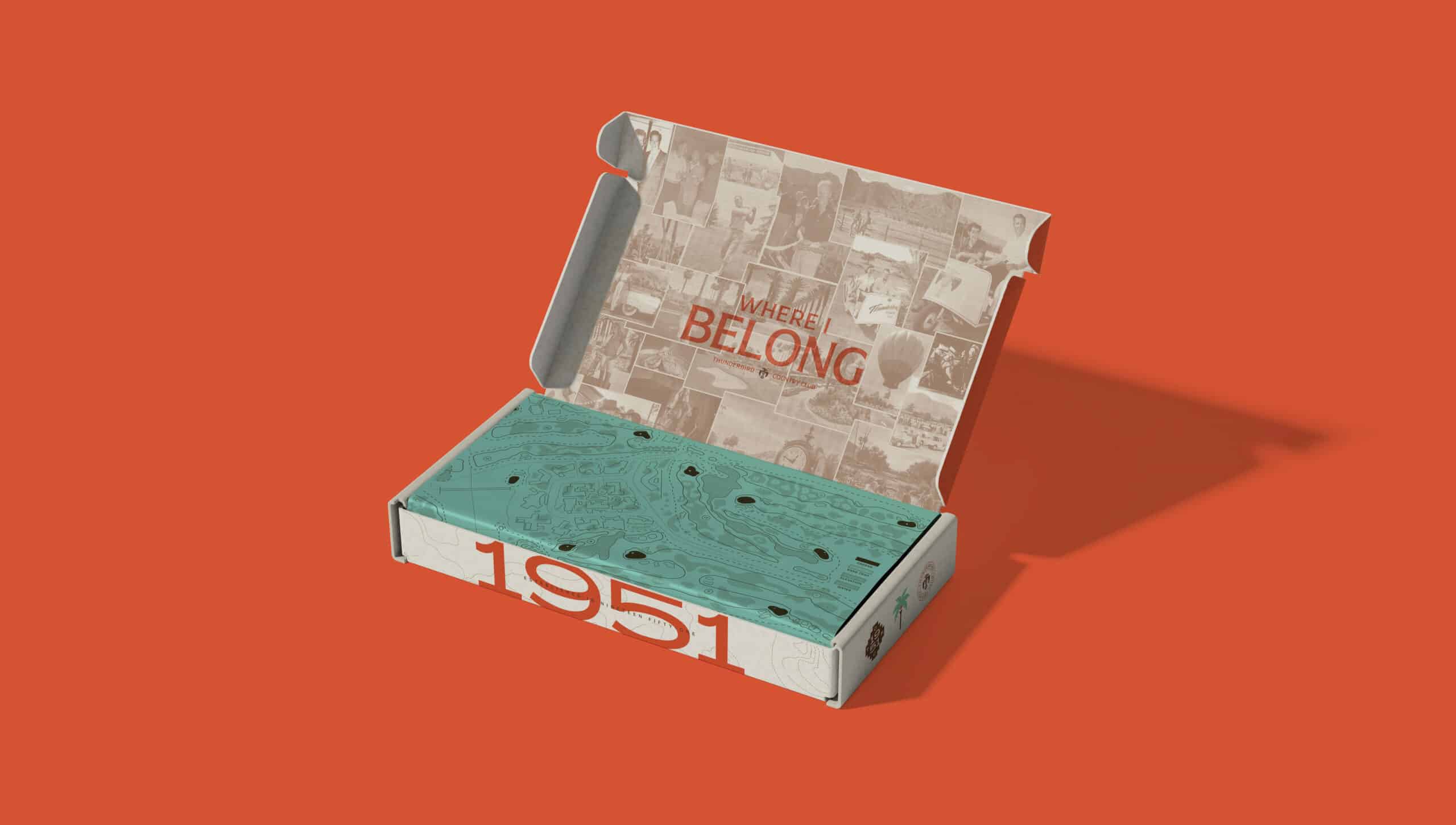
We carefully curated an entire experience into a new member kit that gave them something money can’t buy. A true sense of belonging.
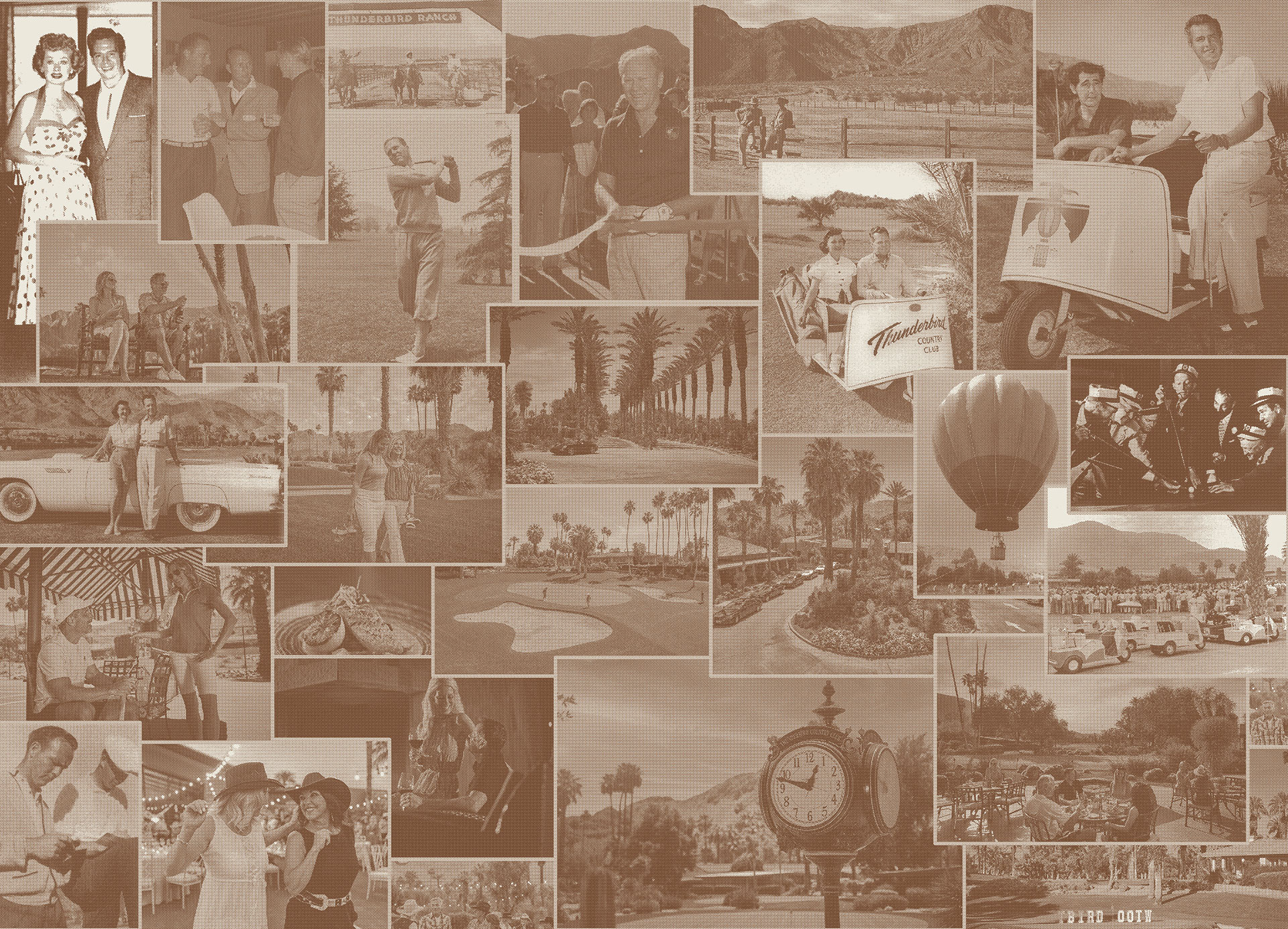
We reimagined onboarding as cultural immersion. A custom member kit arrives with historical photographs and carefully designed materials. A new member guidebook walks through what makes the club special: not just the history or facilities, but the culture, the warmth, the feeling of belonging. From day one, new members understand they have joined something special. Across the property, murals and signage now tell the story. On-course elements bring history to life where members experience it. The identity is not something members read about; it is something they walk through, encounter, and absorb.
Signature Tournaments
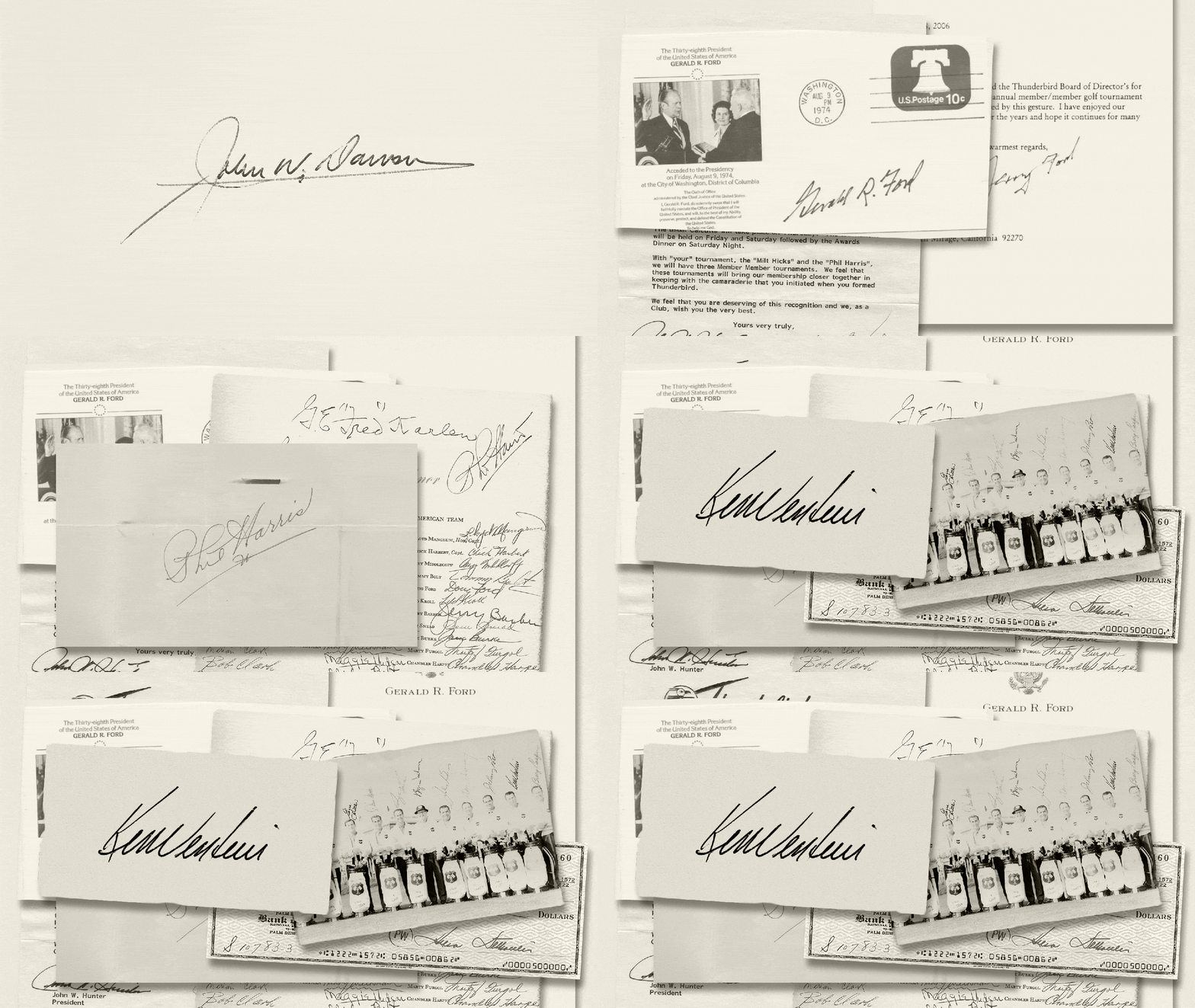
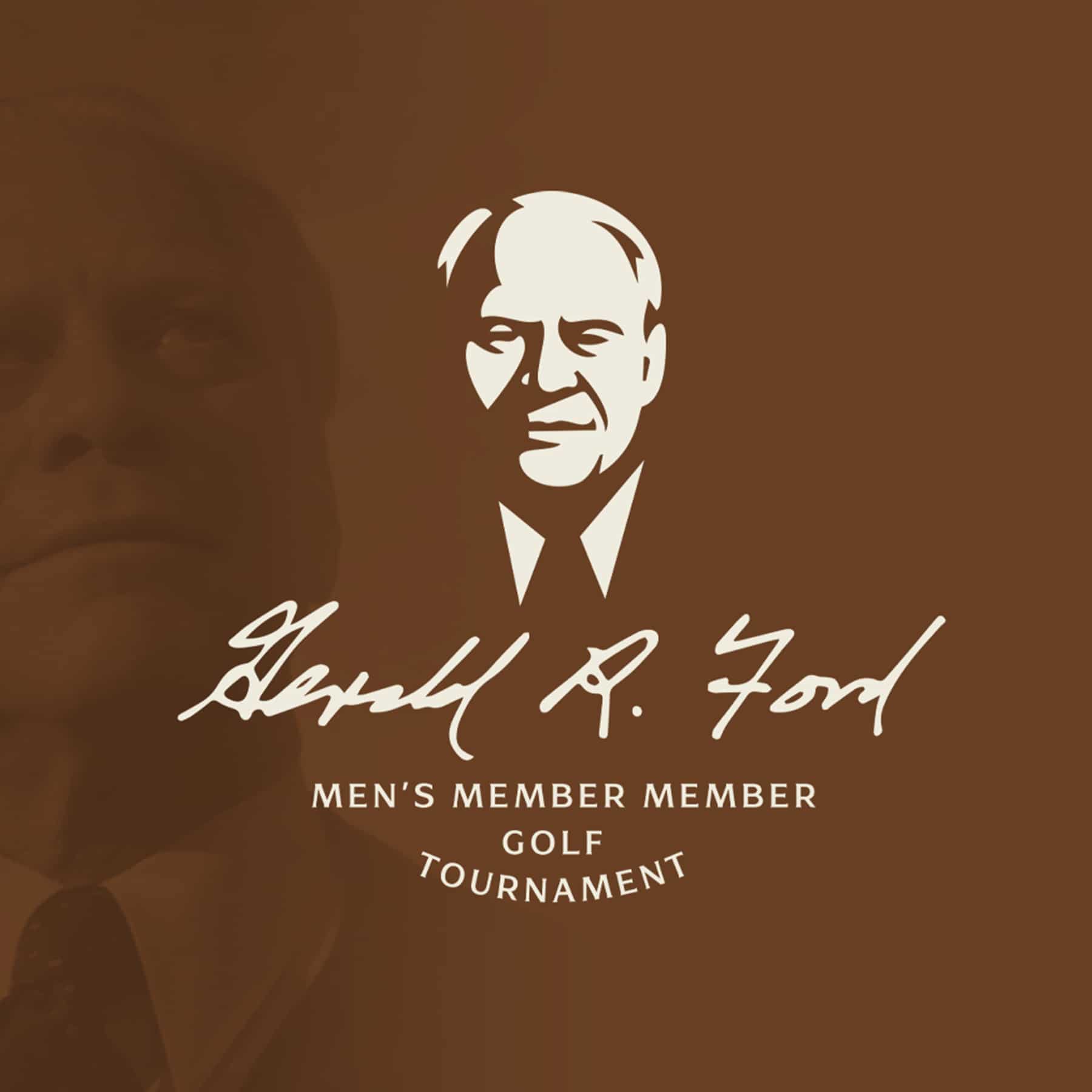
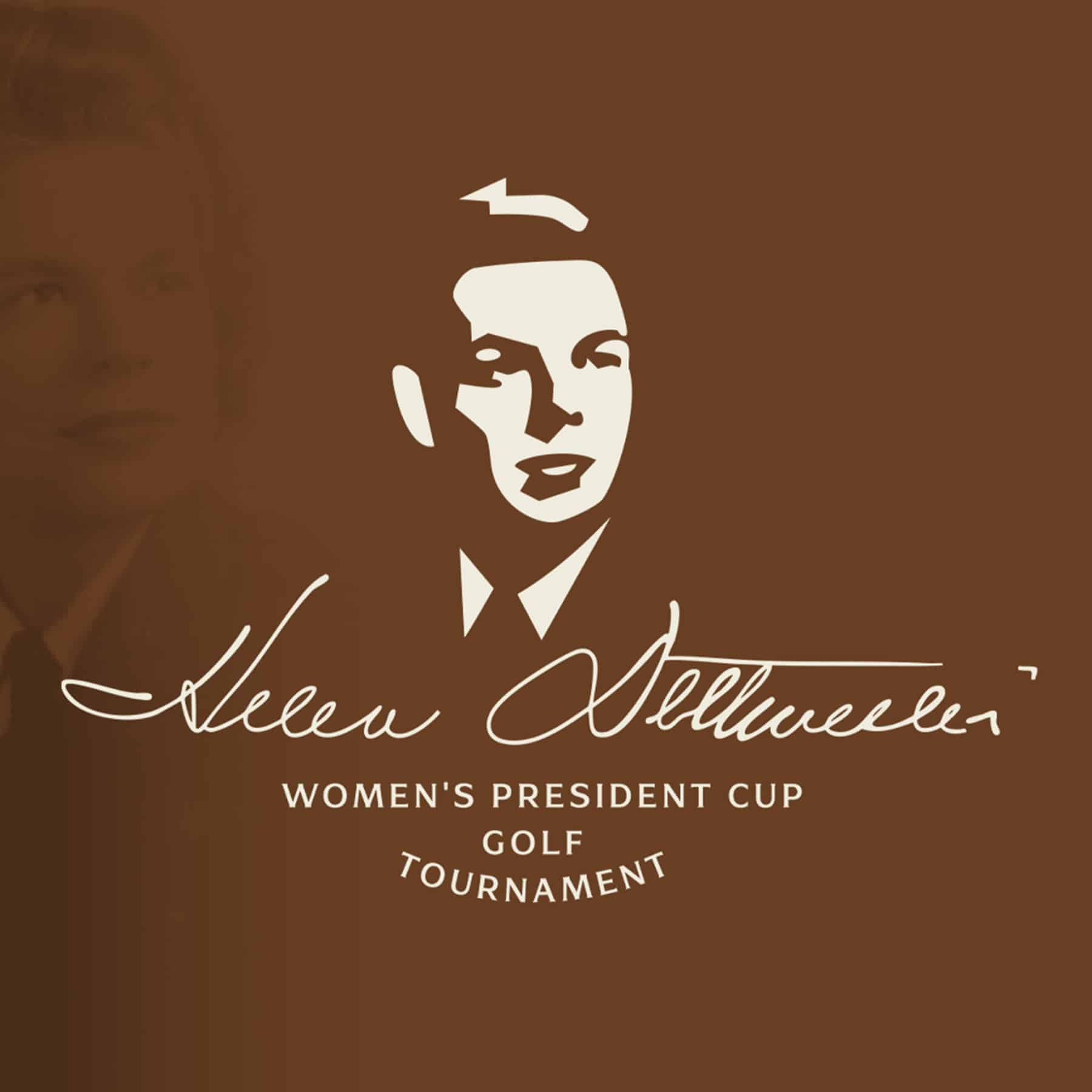
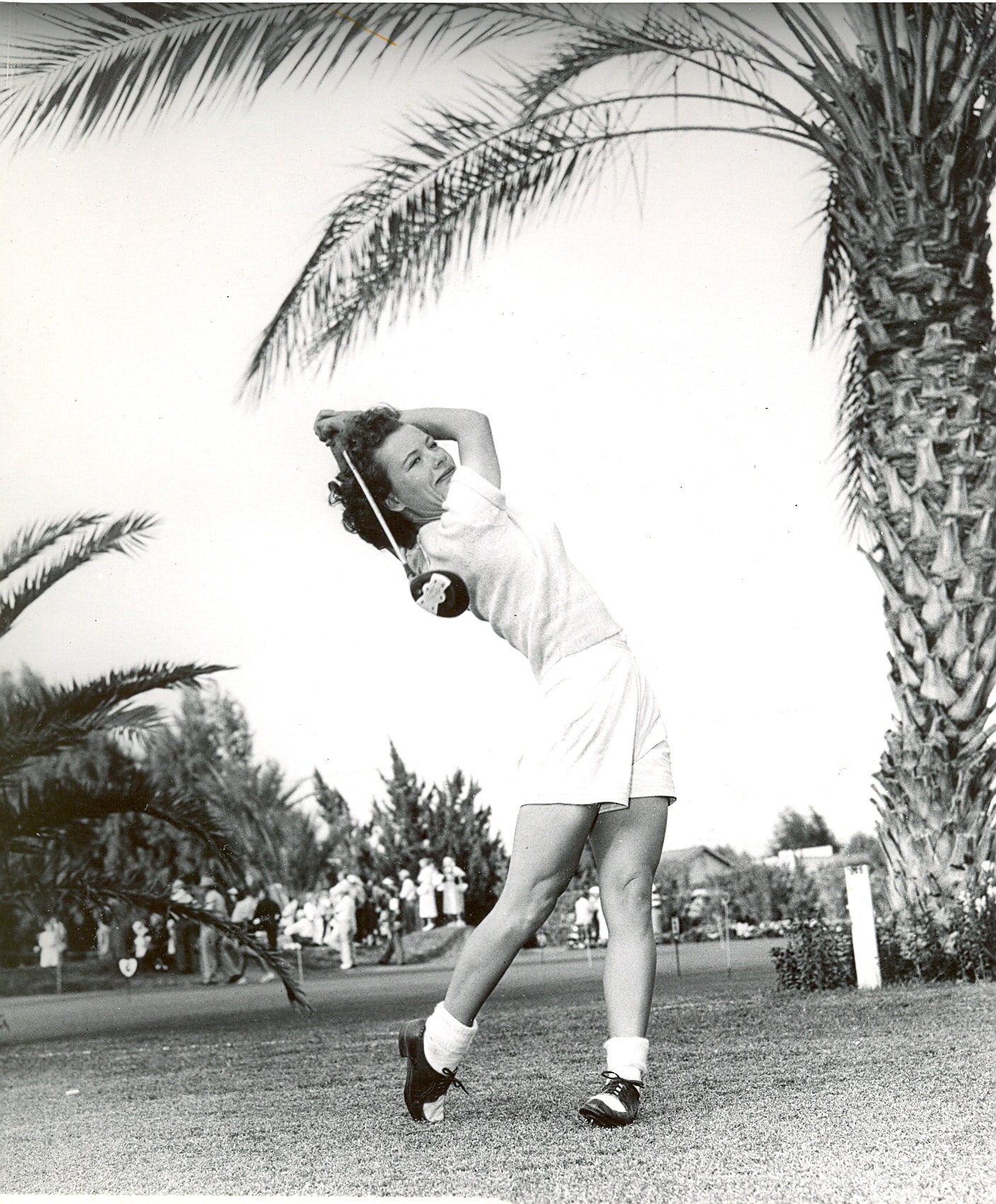
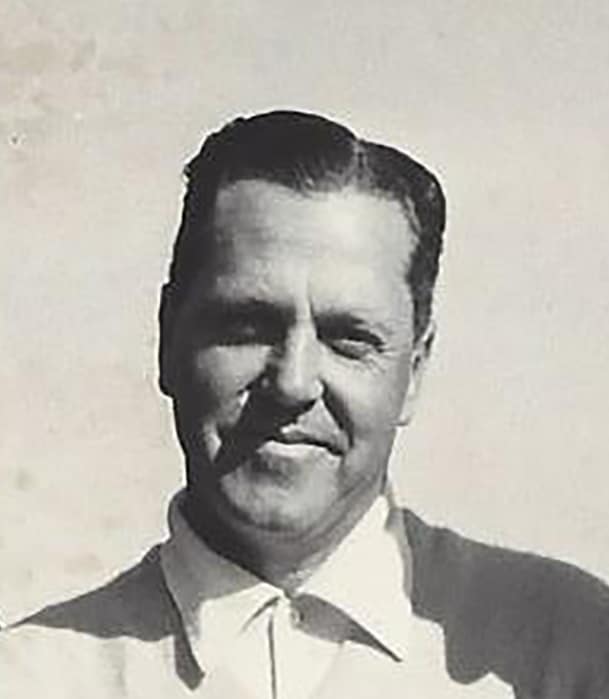
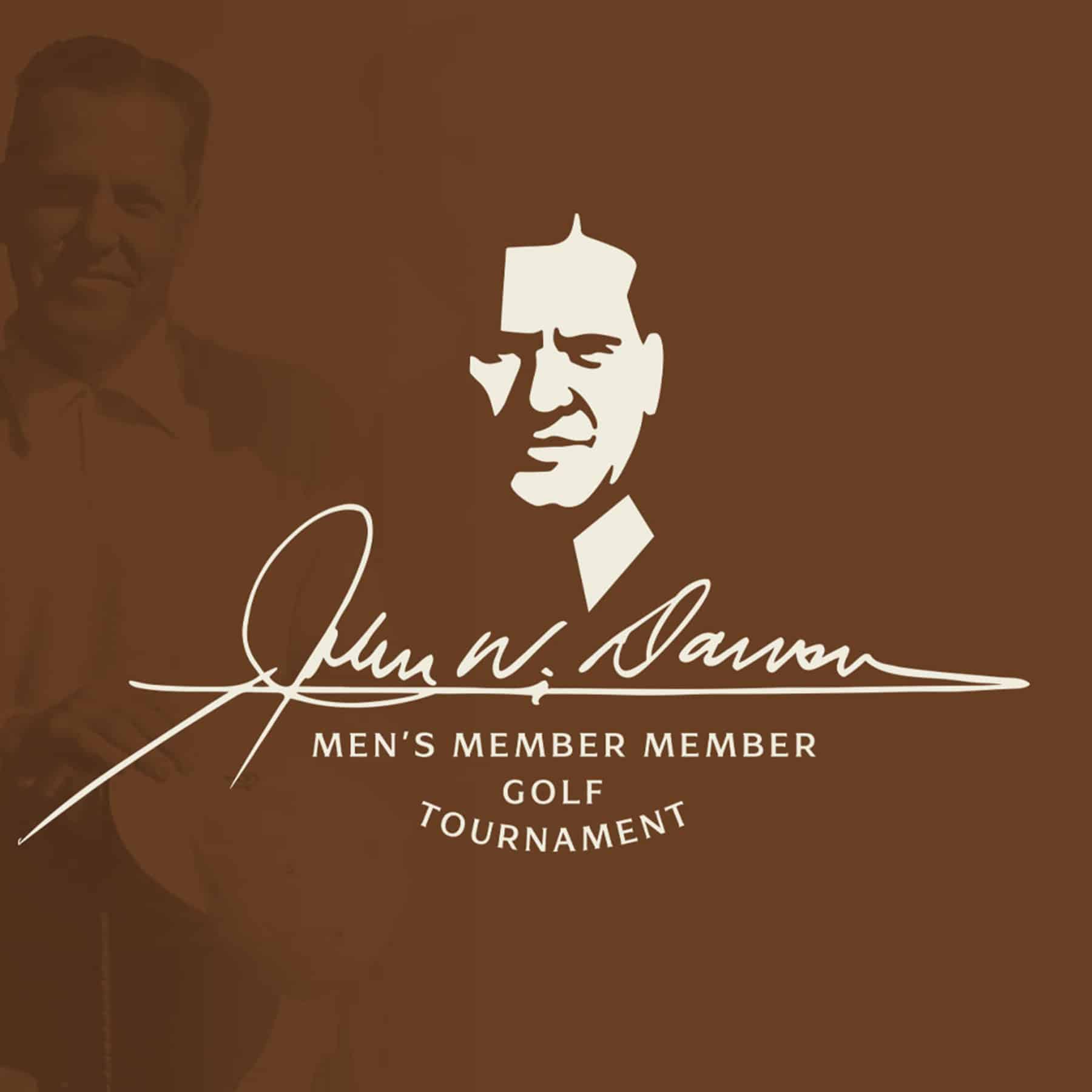
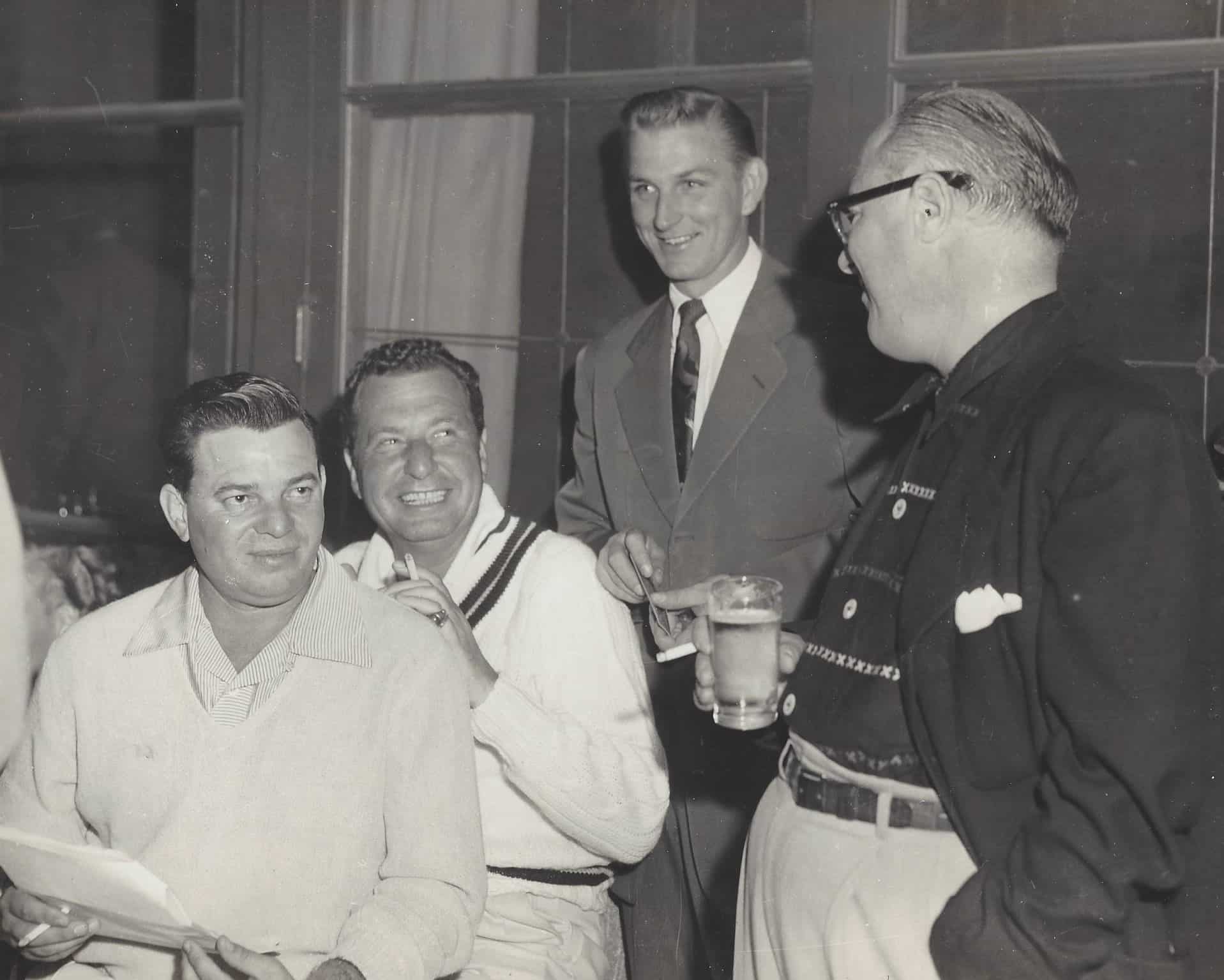
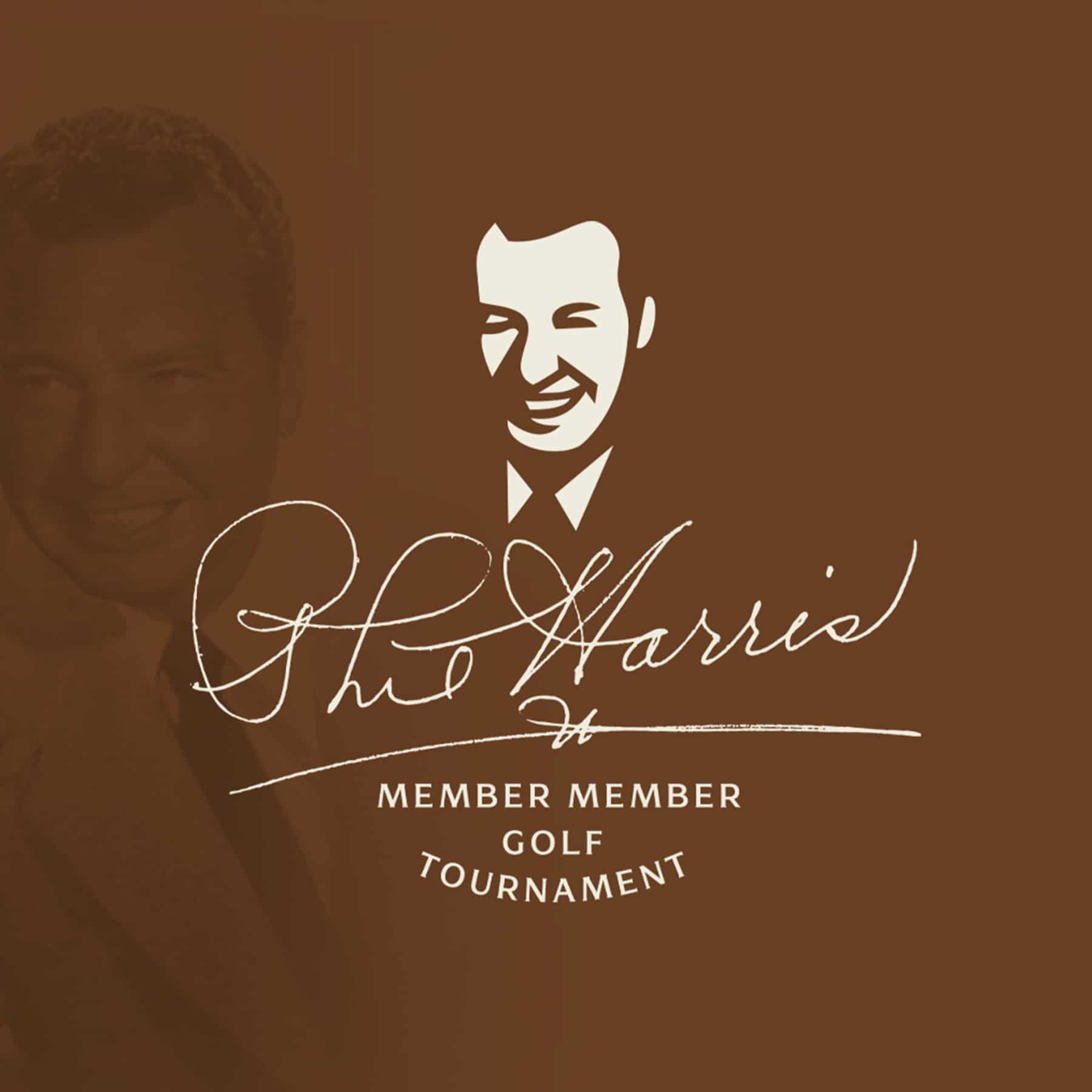
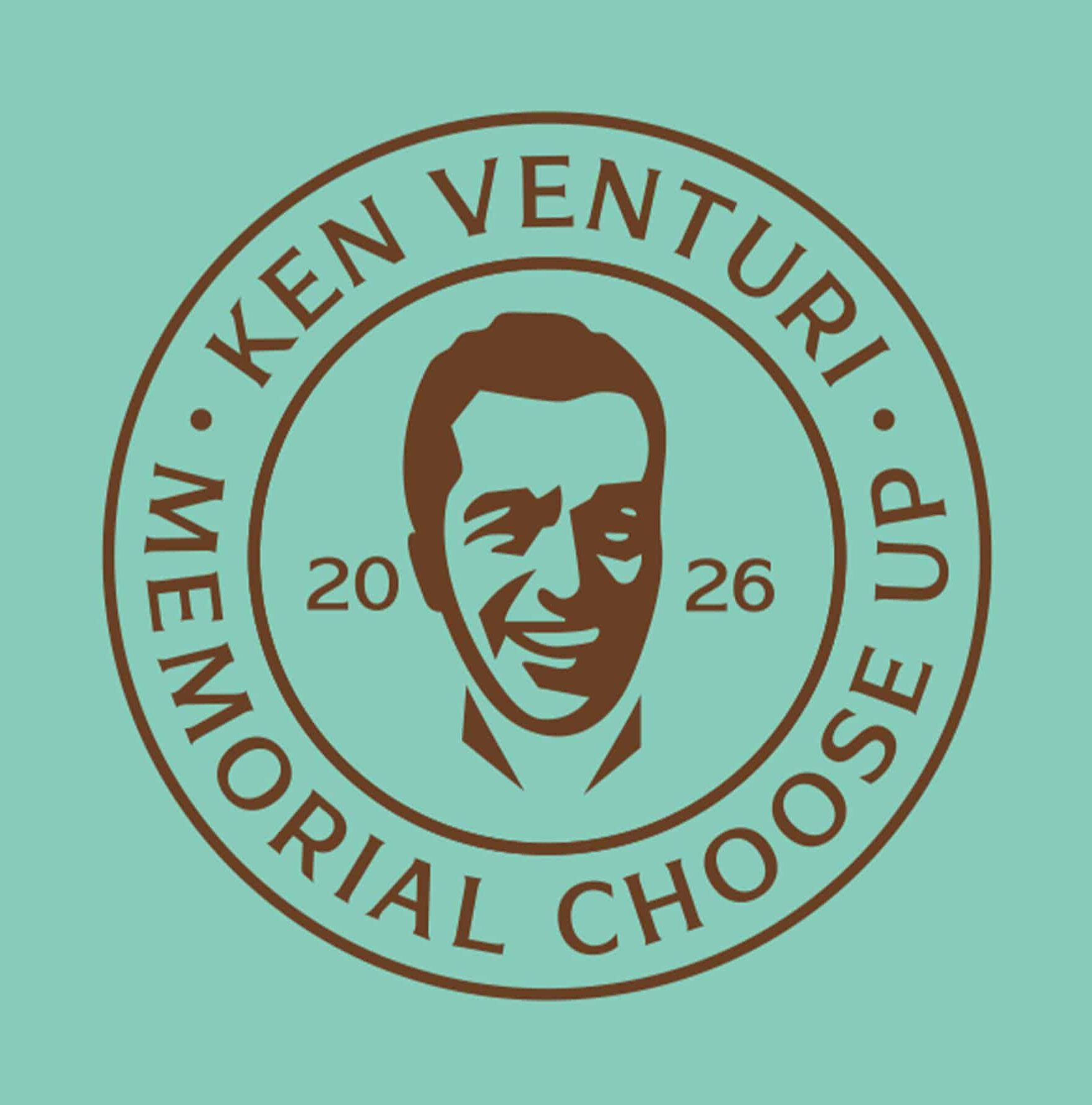
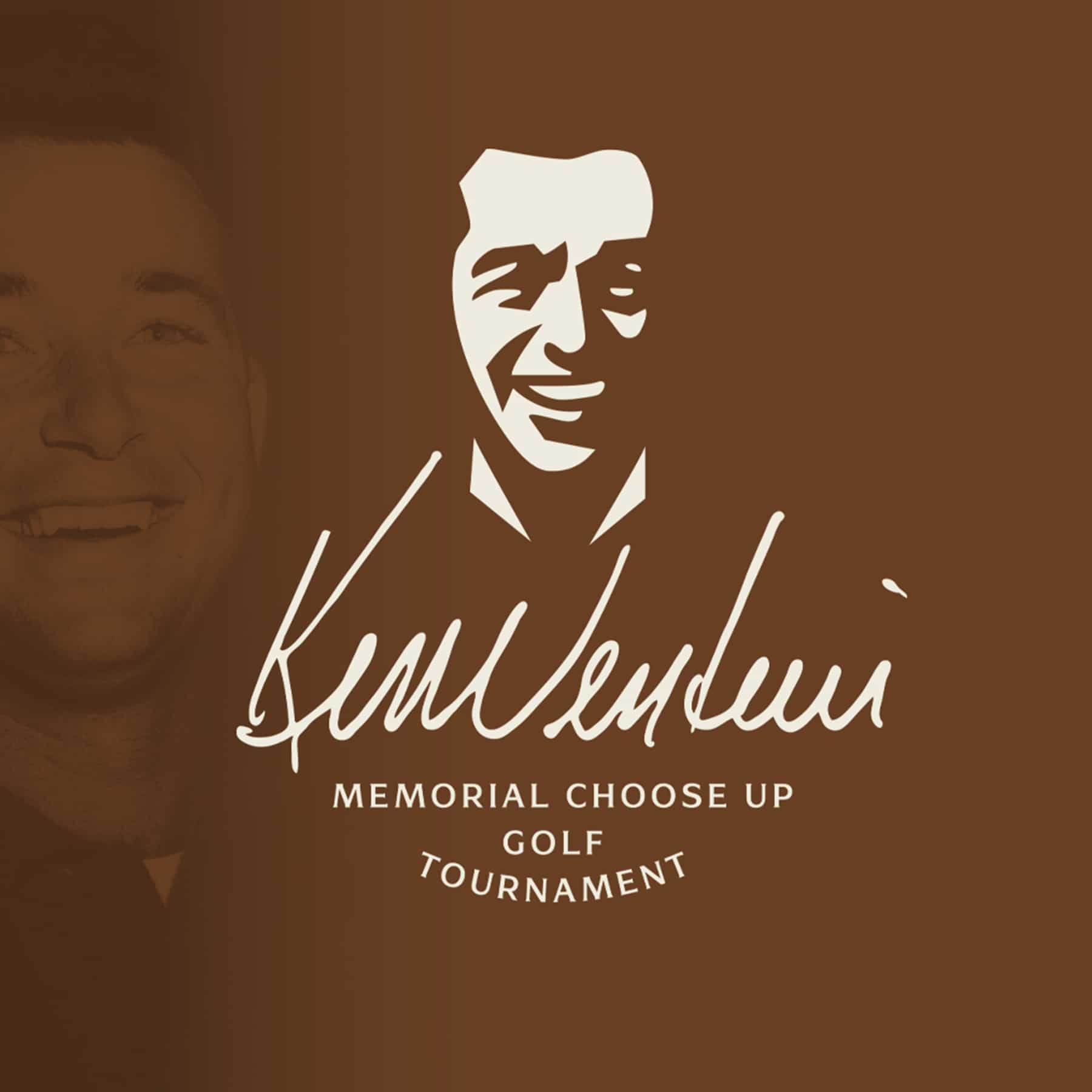
Over the last 75 years, Thunderbird has been built on a foundation of talent, honor, and tradition. Key members have left lasting legacies at the club, honored annually through tournaments bearing their names. However, these tournaments lacked distinctive visual identities to match their significance.
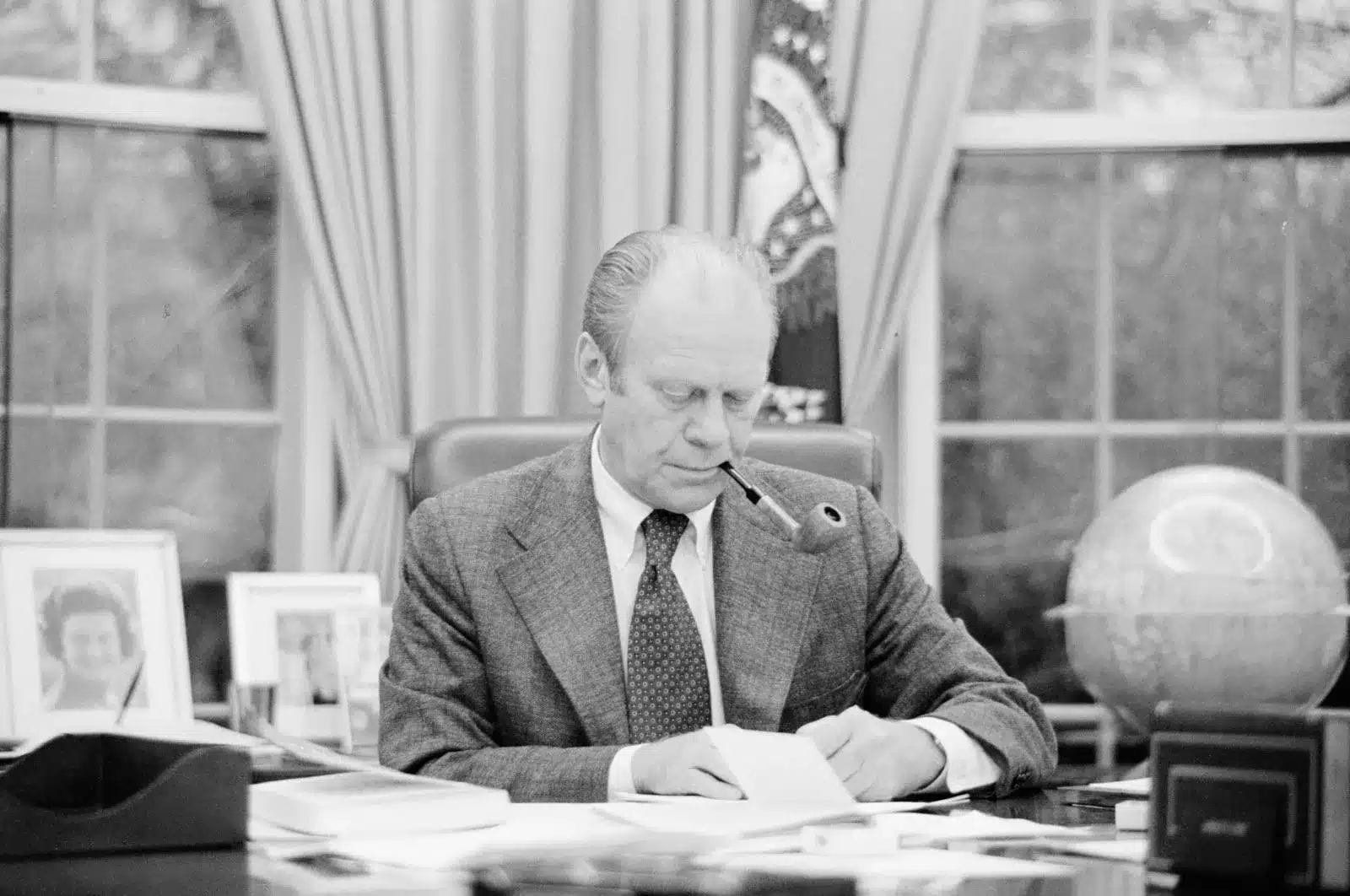
We took a deeper look into the club’s archives and developed a solution: creating “Signature Tournaments” with unique marks for each honoree. By designing recognizable busts, we provided Thunderbird with the tools to properly celebrate the individuals who have shaped the club’s storied history.
A legacy to be proud of for the next 75 years.
Decisions that used to trigger anxiety now have a framework. The 75th anniversary became a celebration of evolution. And most important: Thunderbird now has a story members can tell. About how their club was, is, and will be. About a club confident enough in its legacy to keep writing new chapters.